Dining at Takumi-Tei at Epcot, a Japanese culinary experience:

Yes, you read the title right. Takumi-Tei at Epcot, a signature dining experience at the Japan pavilion, has a set-priced menu at $250 per person (additional items can be added on, too).
Most people probably think of doing a big “splurge” meal at Disney at Victoria and Albert’s, but Jason and I chose Takumi-Tei for our recent anniversary dinner. We are pretty adventurous eaters who love Japanese cuisine and seafood, and I had a feeling it would be something special.
So, was it worth the price tag? Curious what the experience was like, even if you may not plan to try it yourself? Read on, as I’ll detail our entire night!
Location
First things first: where is Takumi-Tei?
Yes, it’s in Epcot, in the Japan pavilion. But there are actually 3 sit-down restaurants in Japan, plus a quick service location and a large shop with many rooms. If you’re not sure where to go, it’s a little tricky to find Takumi-Tei! Depending on which side of world showcase you’re coming from, you may see it more easily.
If you’re coming from the American Adventure pavilion, you’re going to walk across the Japan pavilion almost to the end. At the entrance to the Mitsukoshi store, keep going and it’s tucked away in the corner to the right of the store entrance. If you’re coming from Morocco, it will be one of the first places in Japan on your right.
The Atmosphere
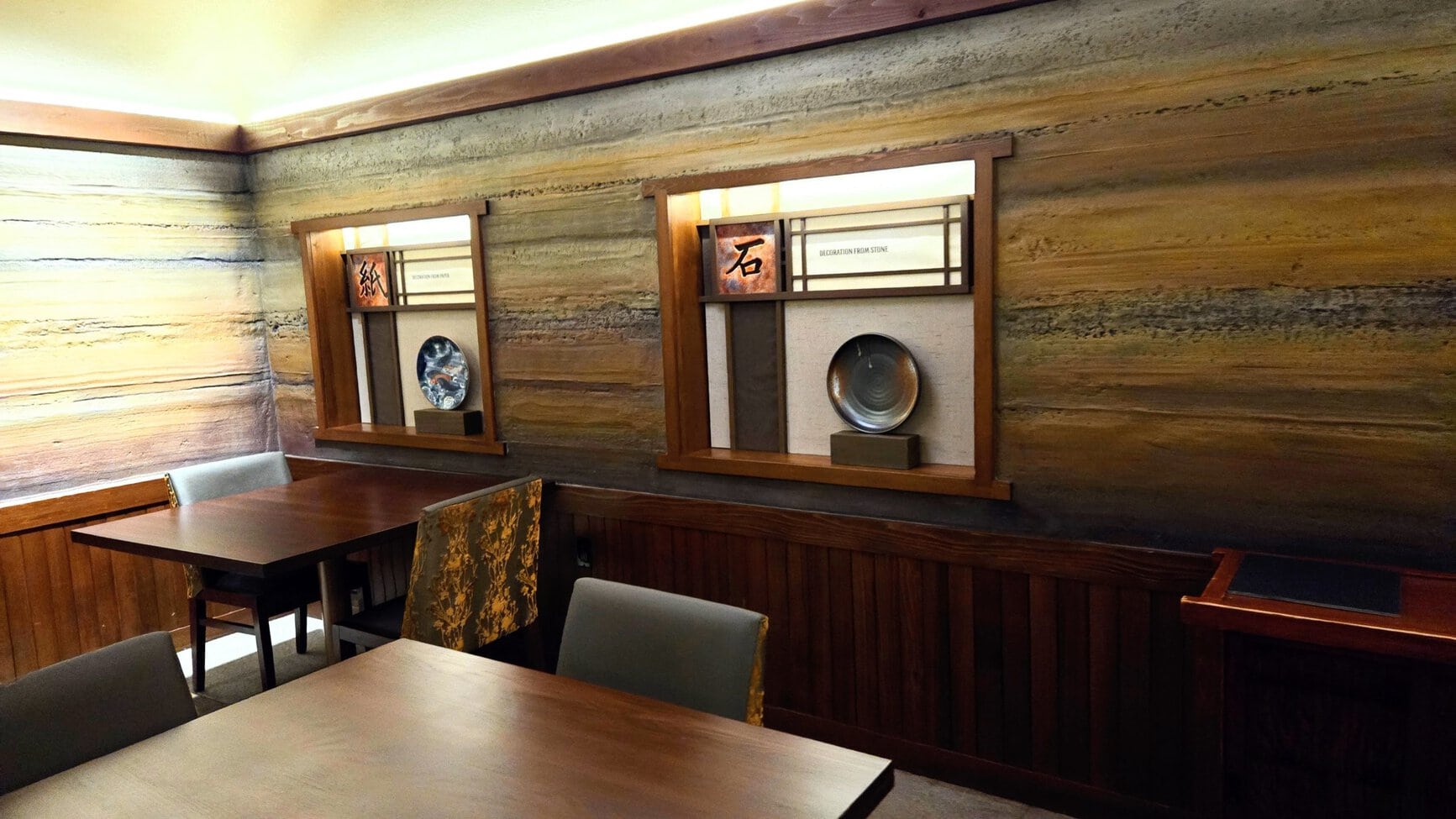
Takumi-Tei has a really unique set-up. There are five different rooms, each of which is themed after a different element – wood, stone, earth, paper, and water.
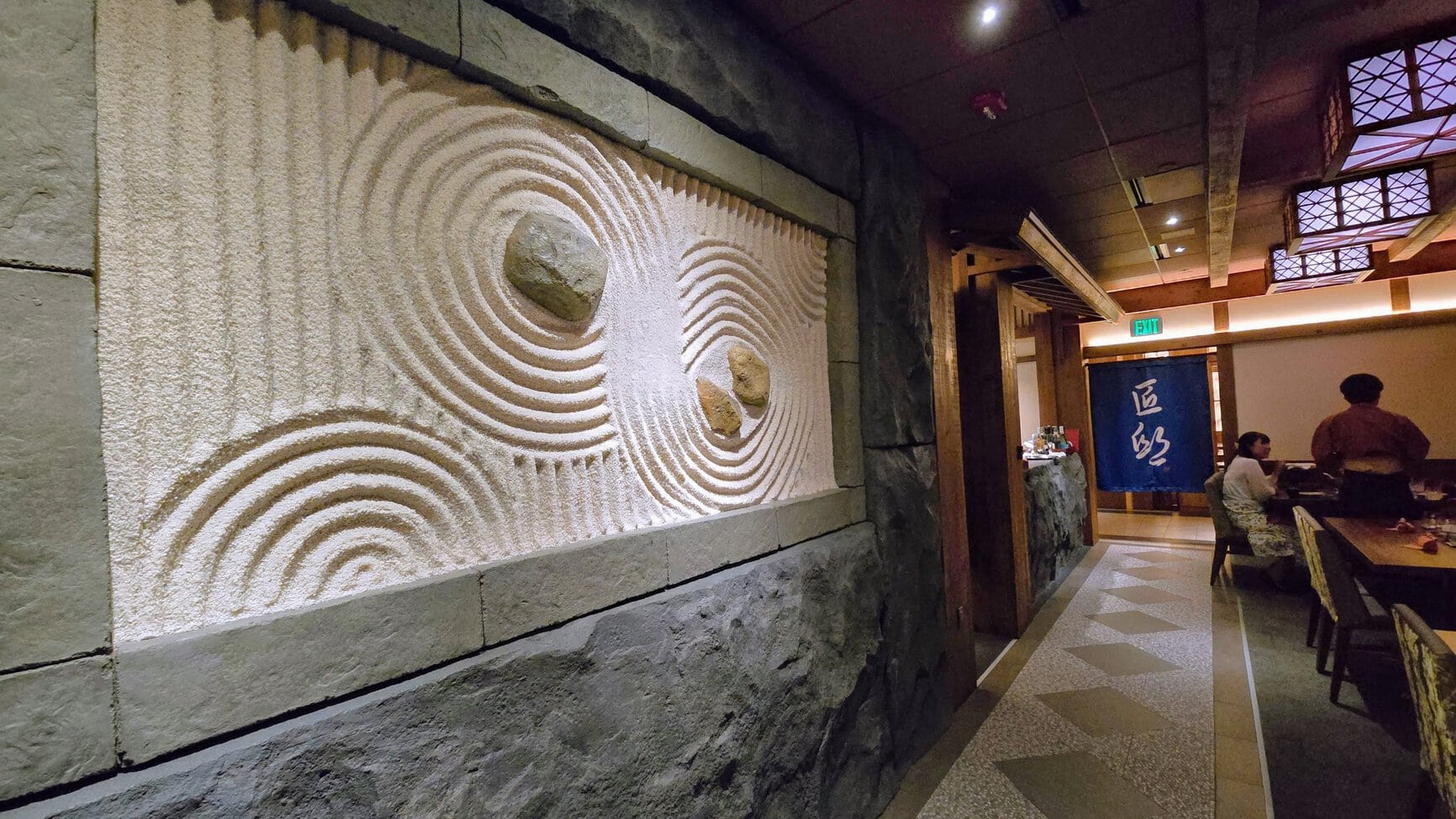
We were seated in the paper room, but our server gave us a tour of the restaurant after we dined to see some of the other rooms. The “earth” room looked like it was the largest, followed by the stone and wood rooms.
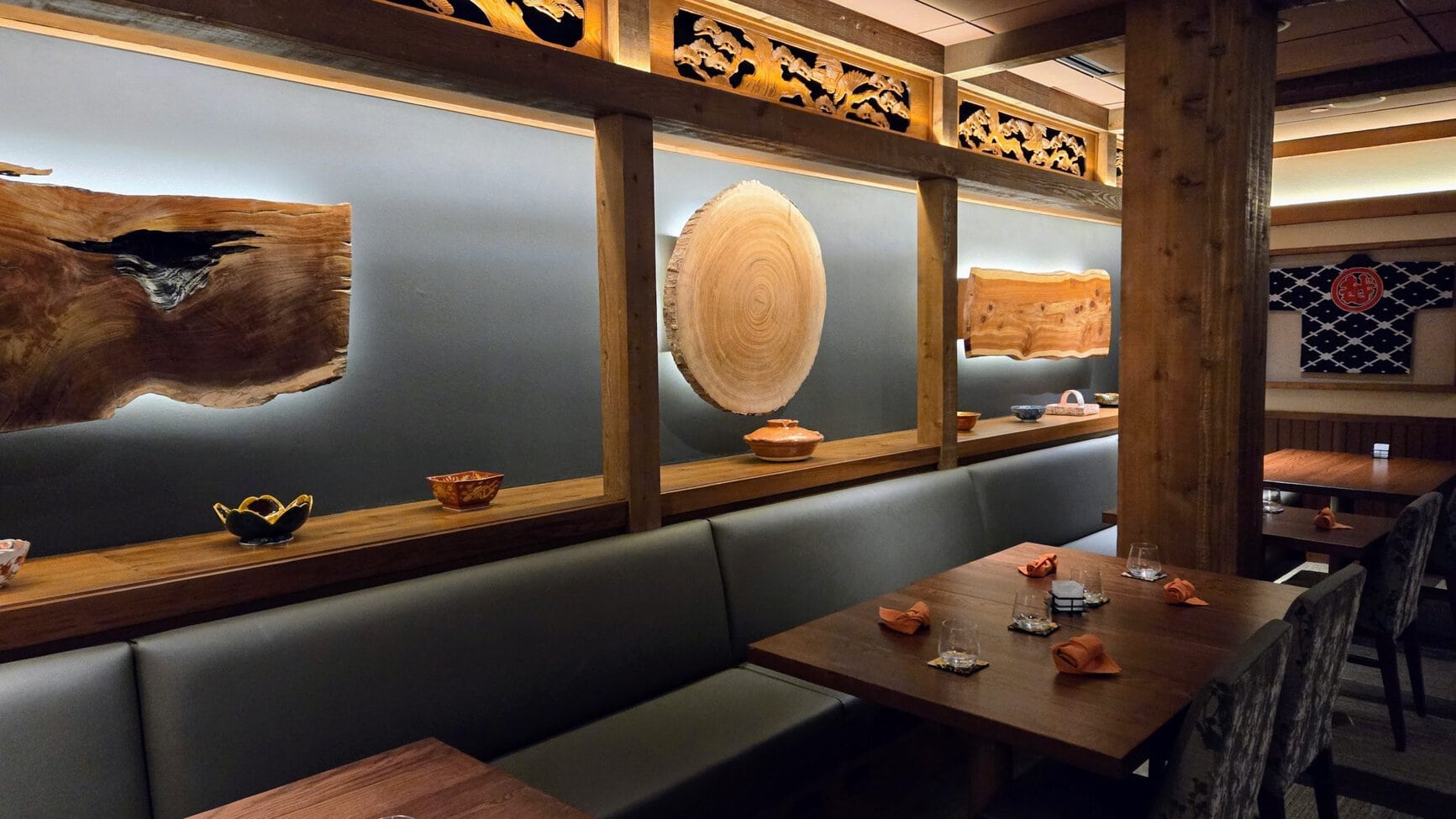
The water room is the only one we didn’t get to see – that one is the “hidden room,” as our server called it. This room is for private events and can be reserved ahead of time for an additional fee.
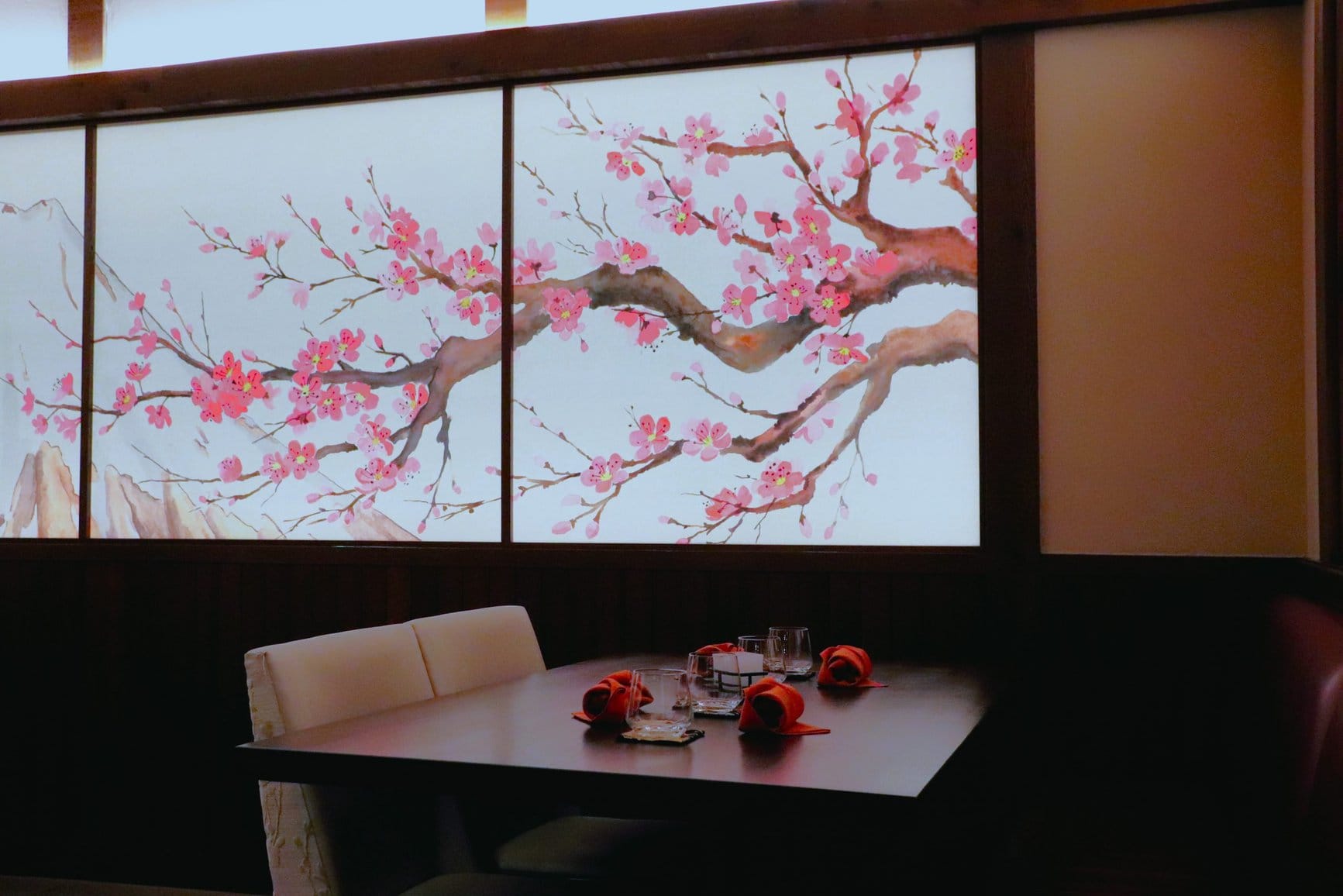
The paper room seemed to be the smallest, with only a few tables. During our time dining, there was only 1 other couple in the room at a given time, so it felt pretty private and intimate. The room is not open to the hallway, but instead has a curtain blocking it off.
I thought this was the prettiest of the rooms, and I was very glad they sat us there. The cherry blossoms were pretty and I liked that it was smaller.
It’s clear a lot of thought went into every single design choice. Not just what’s on the walls, but the chairs, tables, set-up, etc. Takumi-Tei leans heavily on presentation in all aspects, from the room itself to the food, and they do a fantastic job with it.
I sometimes worry a really “fancy” place may feel too intimidating to me, but this was not the case at all here. Takumi-Tei strikes the perfect balance of feeling like a special experience while still being peaceful, comfortable, and welcoming. The cast members working there have a lot to do with this, as well.
Service
Your server at Takumi-Tei is more than the average restaurant server. Not only are you having a 7-course meal, you also don’t know exactly what you’re getting for each course. So the cast member assigned to your table walks you through each dish and is happy to answer questions.
Not only are they bringing you each of the 7 courses, they are also taking drink orders, constantly refilling your water, and even making green tea tableside at the end of your meal.
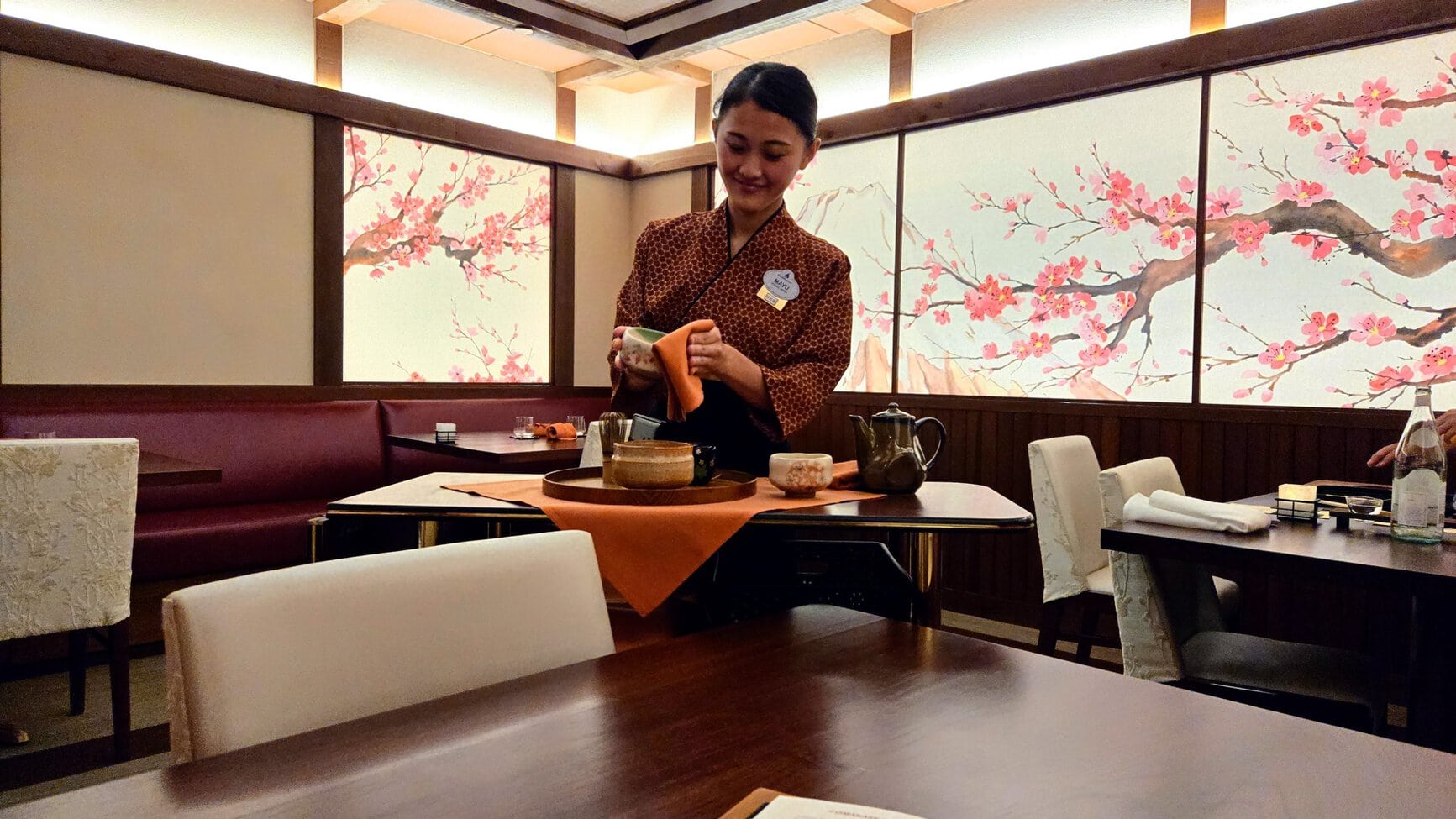
It was the kind of place where if you got up to go to the bathroom and put your napkin on the table, they took it away and brought you a new one. Jason and I joked about trying to use the bathroom and come back before they noticed. But they are very on top of things!
Our server’s name was Mayu, and she was fantastic. So friendly, excited and passionate about the food and where she was from. It was clear she genuinely wanted to share her country’s cuisine with us and she really added to the experience.
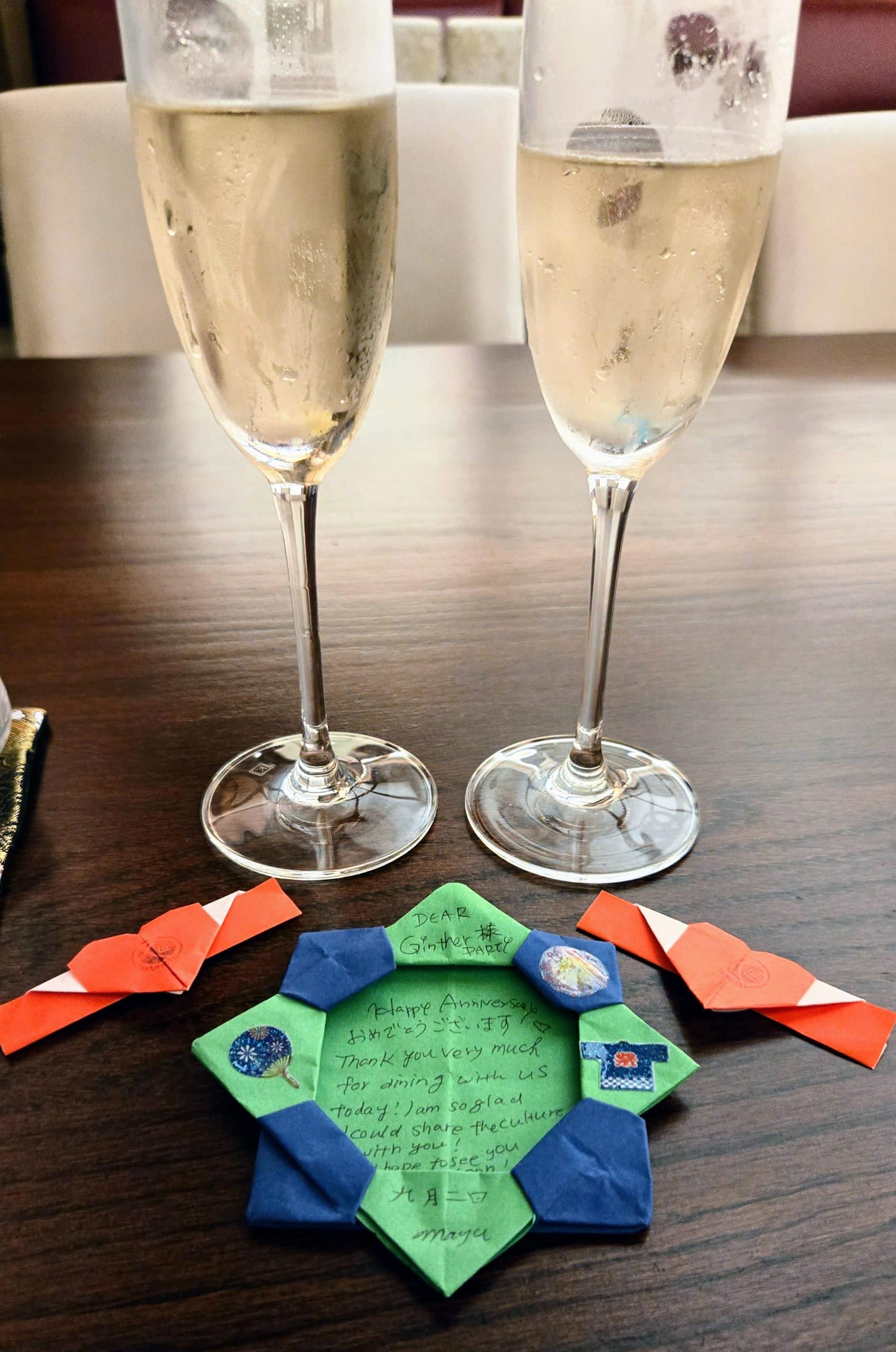
Because we were celebrating our anniversary, she brought us two special drinks to try during the night (more on those below). The one sake was from her hometown, and she was very proud to share that with us. At the end of our meal, we also received a beautiful origami card. She had written such a sweet message, and explained what the Japanese characters meant.
The menu has changed a few times since Takumi-Tei opened in 2019, but as of right now you have a choice of two prix-fixe menus. Both are “omakase,” which literally translates to “I leave it up to the chef.”
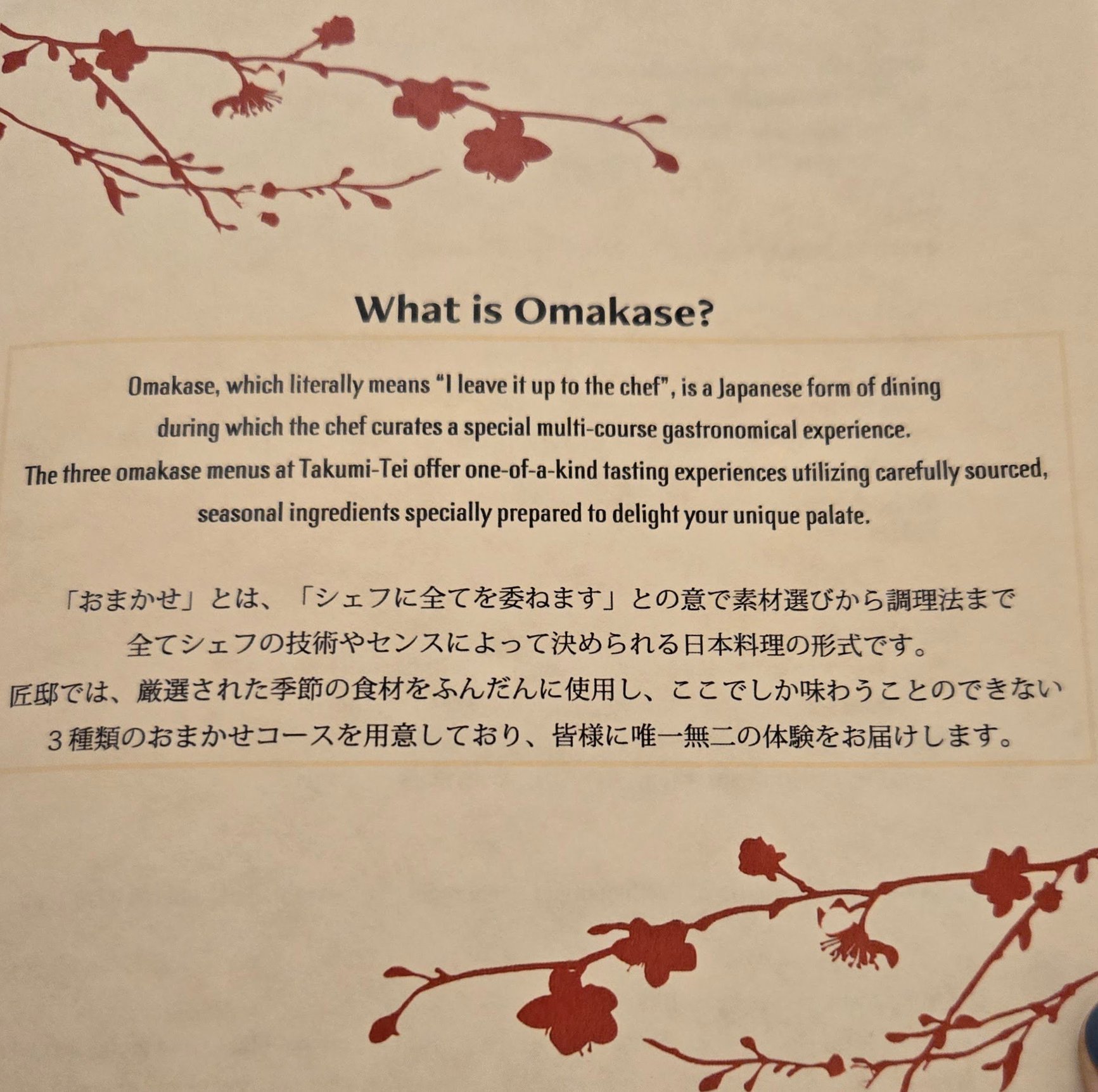
You get a 7-course tasting meal for $250, and you can opt for the Kiku menu (omnivorous, includes seafood and meat), or Haru menu (plant-based). You do have to select one of these per person, and they confirm before you enter the restaurant that you are okay with that and with the price tag.
Most of the courses are set in advance, though you get an option for the entree and dessert. They also change seasonally, and of course everything is up to the chef’s choice.
There was also an insert about an additional dish that could be ordered, and had rice, sea urchin, and wagyu beef for an extra $100. Honestly, I cannot imagine being able to eat any more food than what we had!
Drinks at Takumi-Tei
You can opt to get specialty alcoholic or non-alcoholic beverages at Takumi-Tei for an additional charge. If you really want to go all in, you can choose to do a sake pairing or wine pairing, which will bring you 5-6 different ones to try throughout the meal. Prices for that are not listed on the menu – I can’t remember the exact number, but I think it was in the $100-150 per person range.
You can also get sake flights or individual pours. There is a nice Japanese whisky menu too, as well as a wine menu and a few beers. For cocktails, when we dined they had several non-alcoholic cocktails and 4 alcoholic ones. We ended up trying all 4 of them throughout the night (we each had two).
Jason first ordered the Sakurajima (Iwai Whisky, Lemon Juice, Smoked Cherrywood):
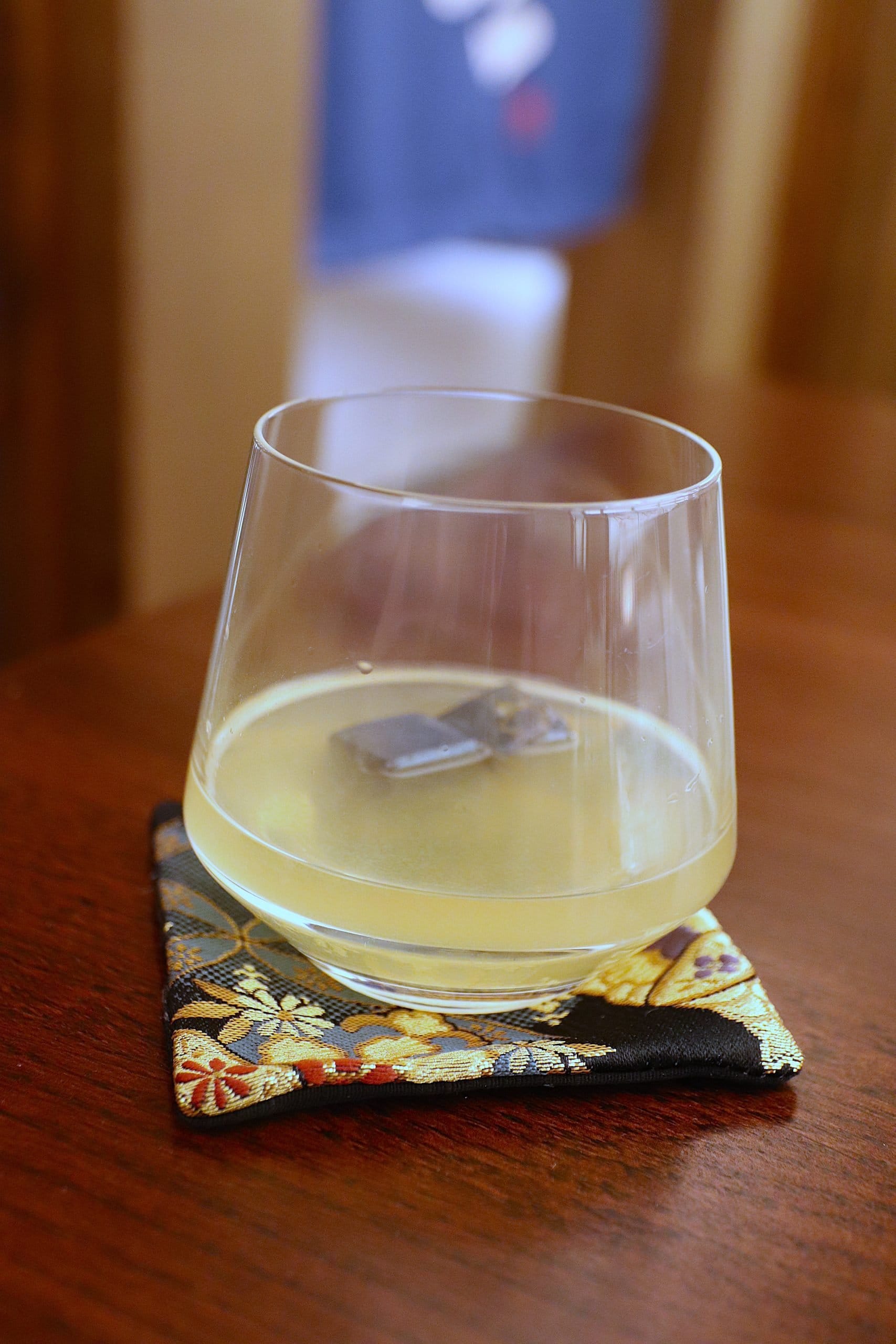
He described this as a smoky old fashioned, saying it was delicious and sweet. I took a sip and thought it was fantastic. I really didn’t get the more harsh alcohol taste you normally expect from a drink like this. It was smooth and had a surprising sweetness which didn’t match the smell. And the presentation here was special, with the drink arriving in a glass case to hold in the smoke until it was served.
My first drink was the Kami (KI NO BI Gin, Nigori “Sacred Mist” Sake, Lychee Calpico, Lychee):
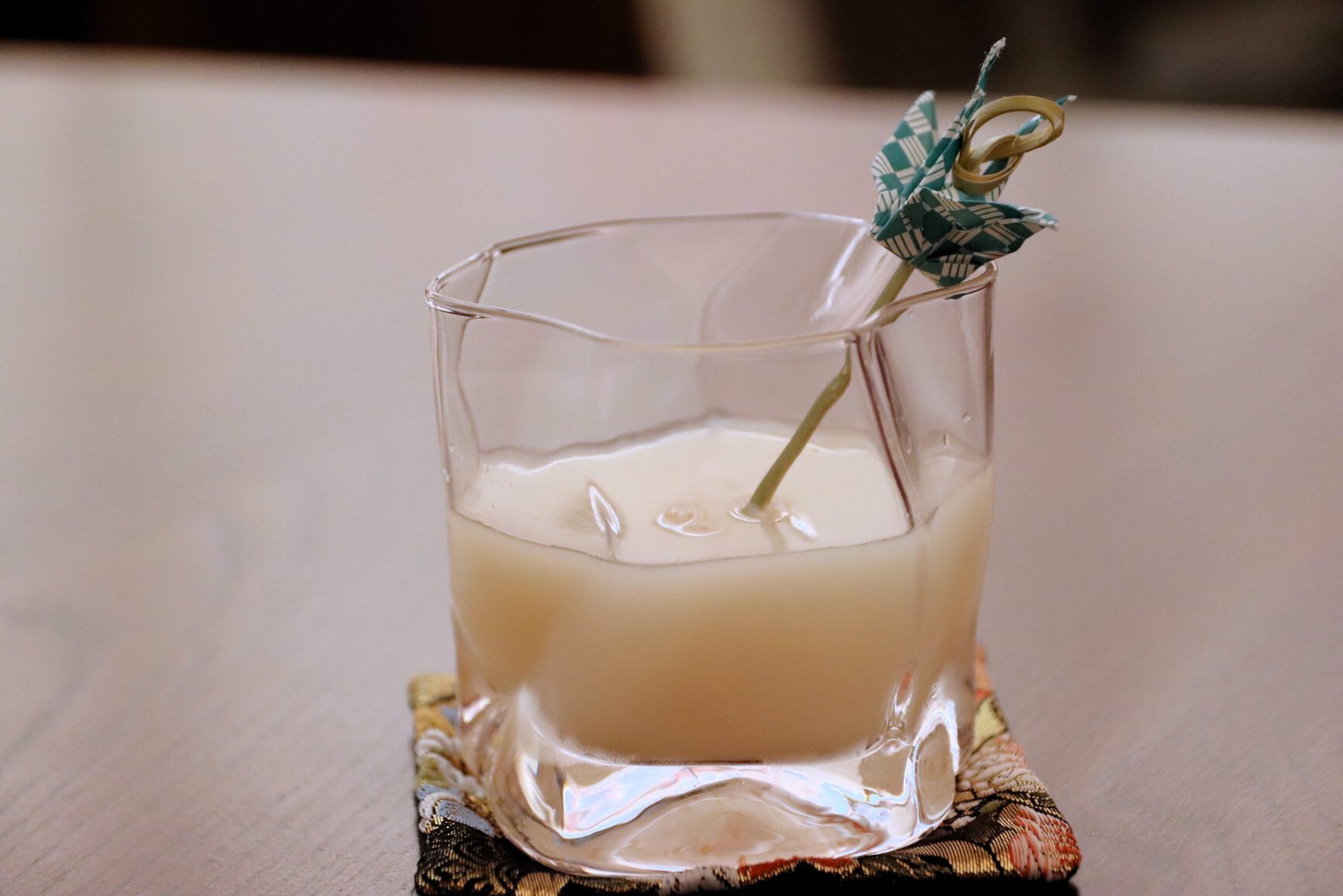
I enjoyed this, but it was probably my least favorite of the 4 we tried. Funny enough, Jason said it was his favorite! It was just a bit too sweet for my tastes. But the flavors were unique, and again the presentation was gorgeous with a lychee garnish secured by a small origami toothpick.
Later on in the meal Jason ordered the Yogan (Haku Japanese Vodka, Lime Juice, Ginger Beer, Lime):
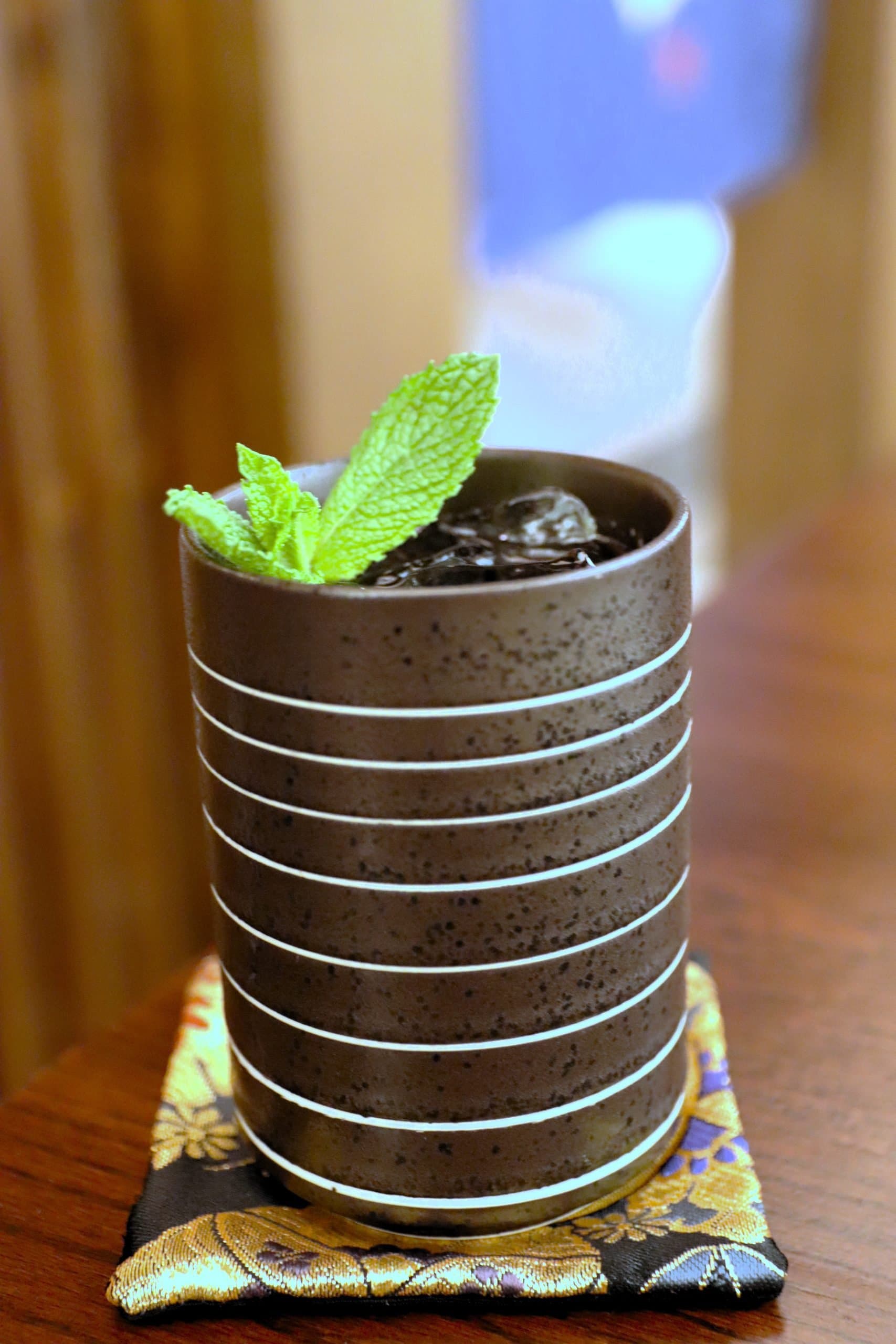
This was good, but probably the most “standard” of the drink we tried. It tasted very much like a moscow mule.
I figured we would round out the cocktail menu and ordered the Kochi (Suijin Sake, Rum, Fresh Mint, Orange, Yuzu Liqueur, Yuzu Juice):
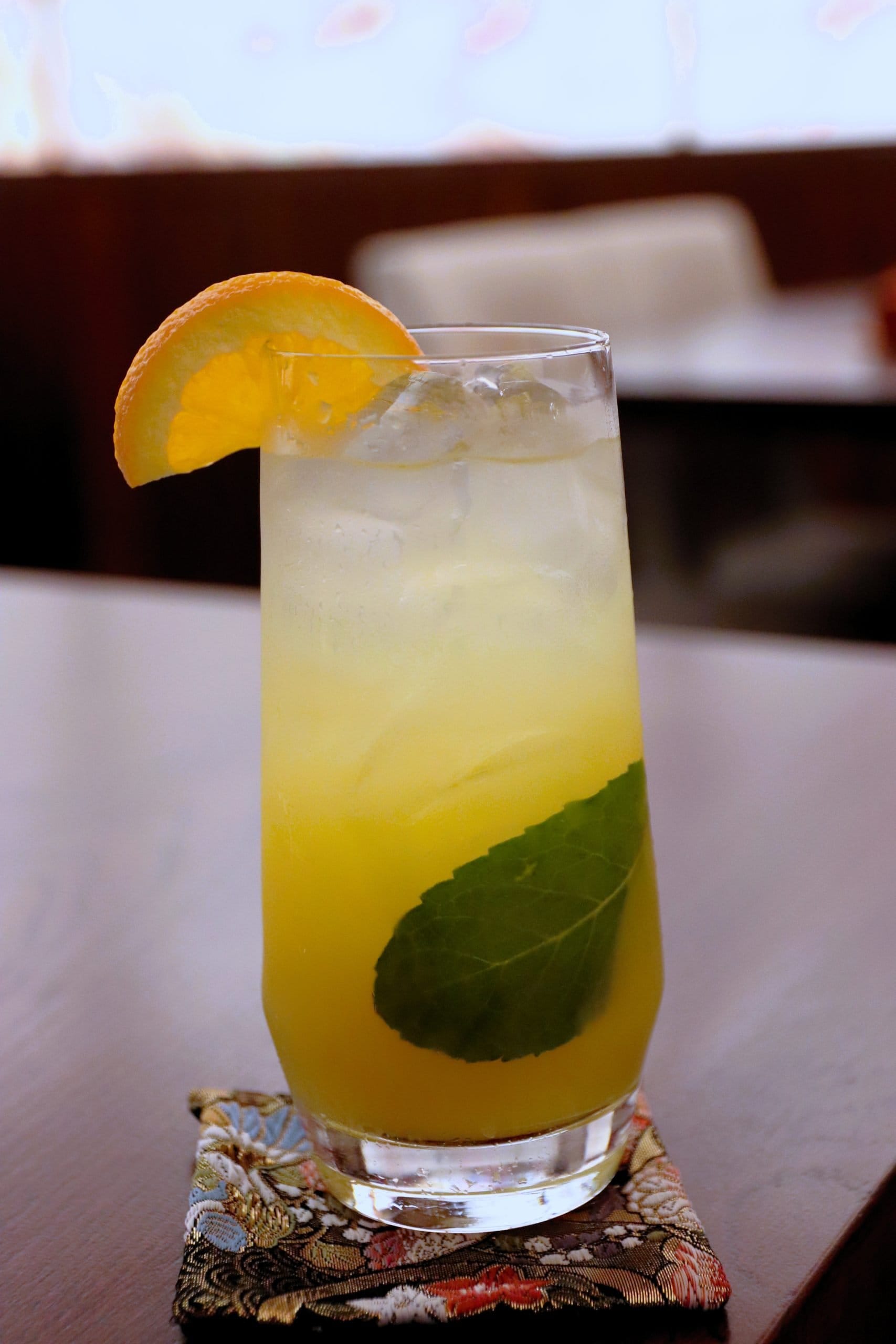
I found this one to be very refreshing. It was sweet without being overly so, and the yuzu is different than what we normally find in drinks so it felt fun and different.
Mayu also gave us two surprise “bonus” drinks during our meal to celebrate our anniversary. The first was a taste of a sake called Fukuju that Mayu told us is served for celebrations, and comes from her hometown in Japan (also where Kobe beef originates).
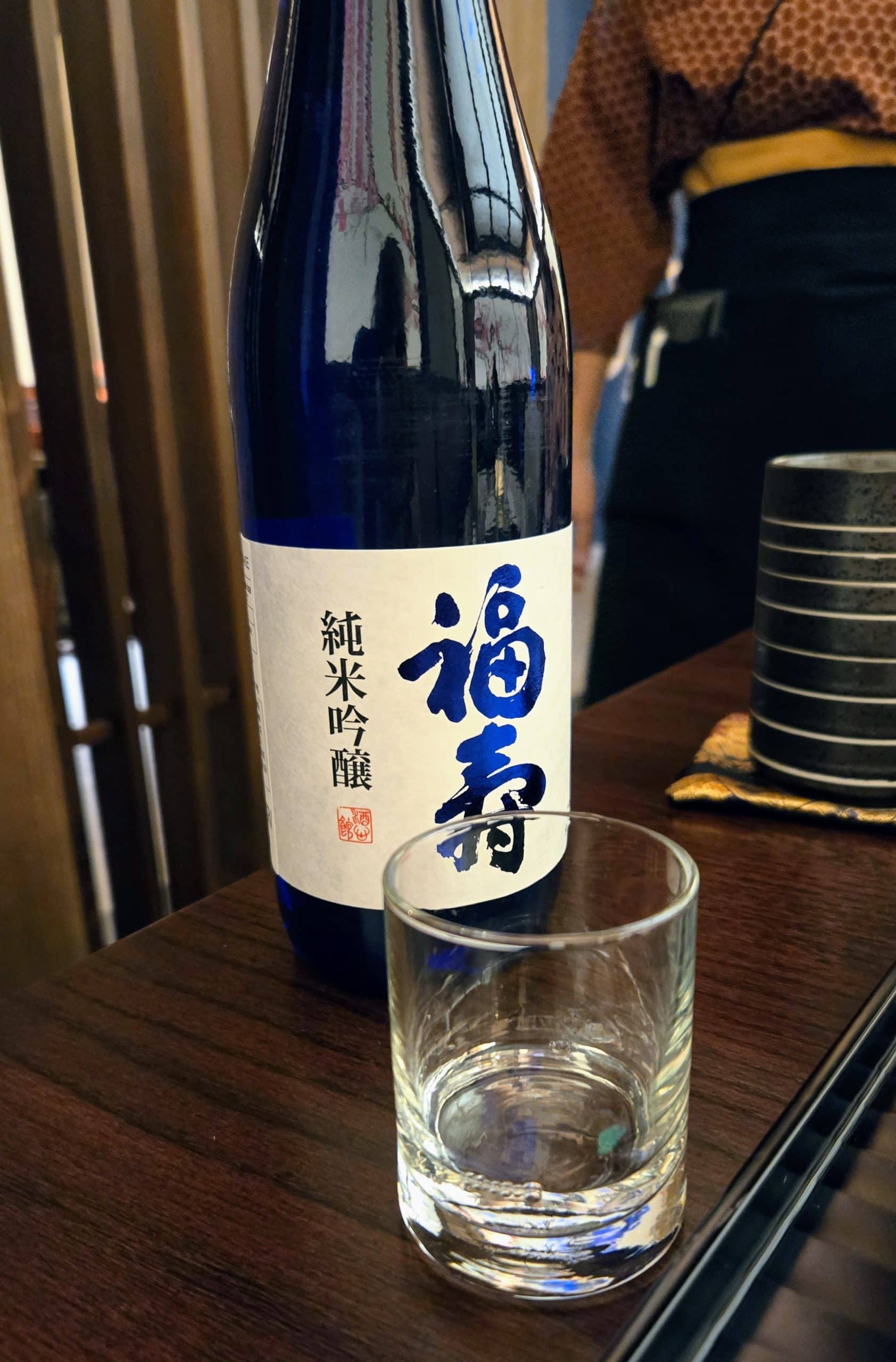
It was excellent. I wish I knew what was in it exactly because it’s hard to describe, but it was very smooth with a hint of sweetness.
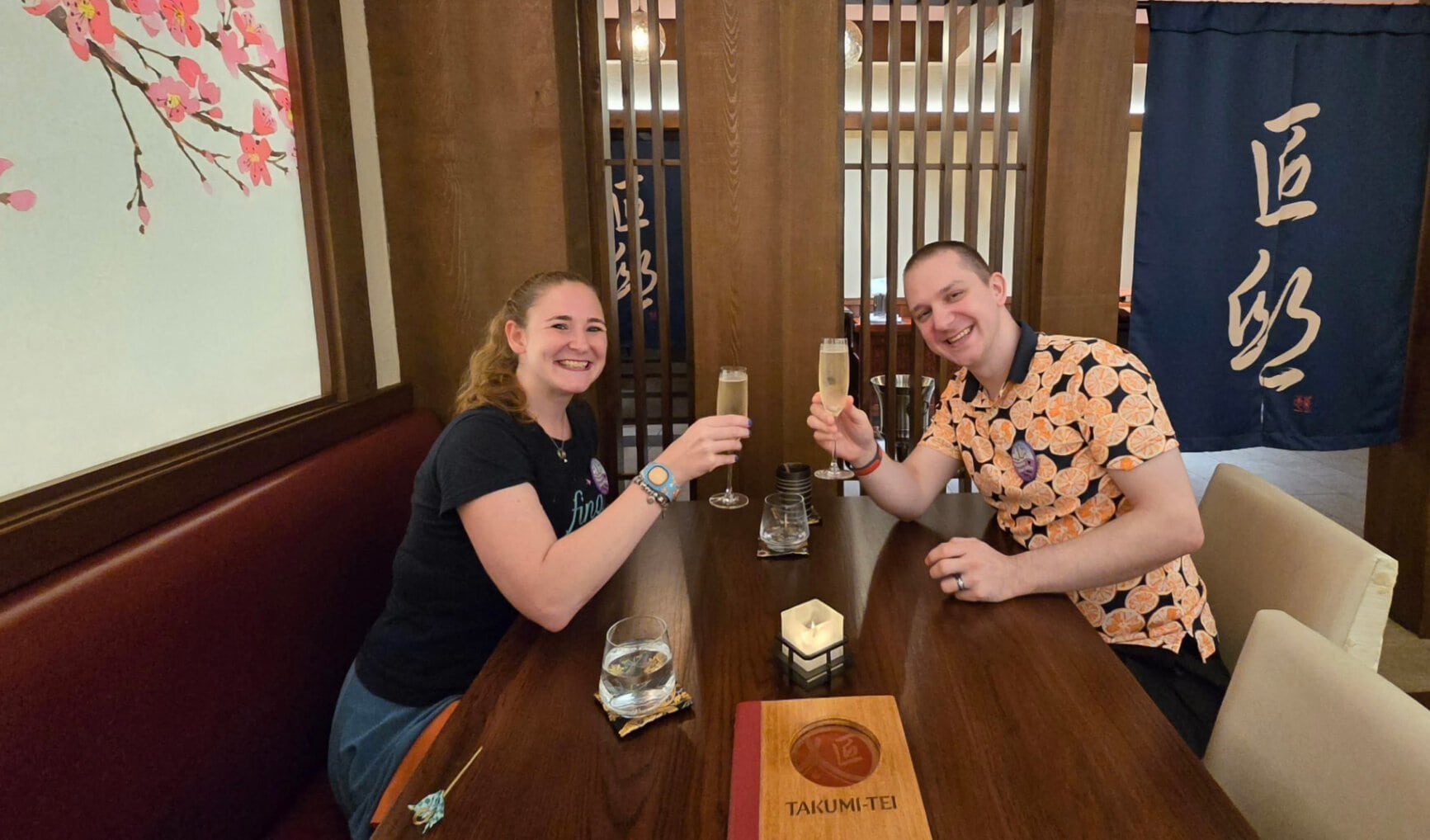
They also brought us two glasses of sparkling wine at the end of our meal. It was a fairly standard sparkling wine, but they managed to make it even more fun by adding something (a small sugar cube?) to the bottom. The fizz was a neat effect and it also added more sweetness to it.
Takumi-Tei review: Omakase Menu “Kiku”
But now it’s time for the main event – the food! I’ll walk you through the 7-course meal we enjoyed. Many of the courses had multiple items on each plate, so we got to try many different things!
Course 1: Ichijyu-Sansai
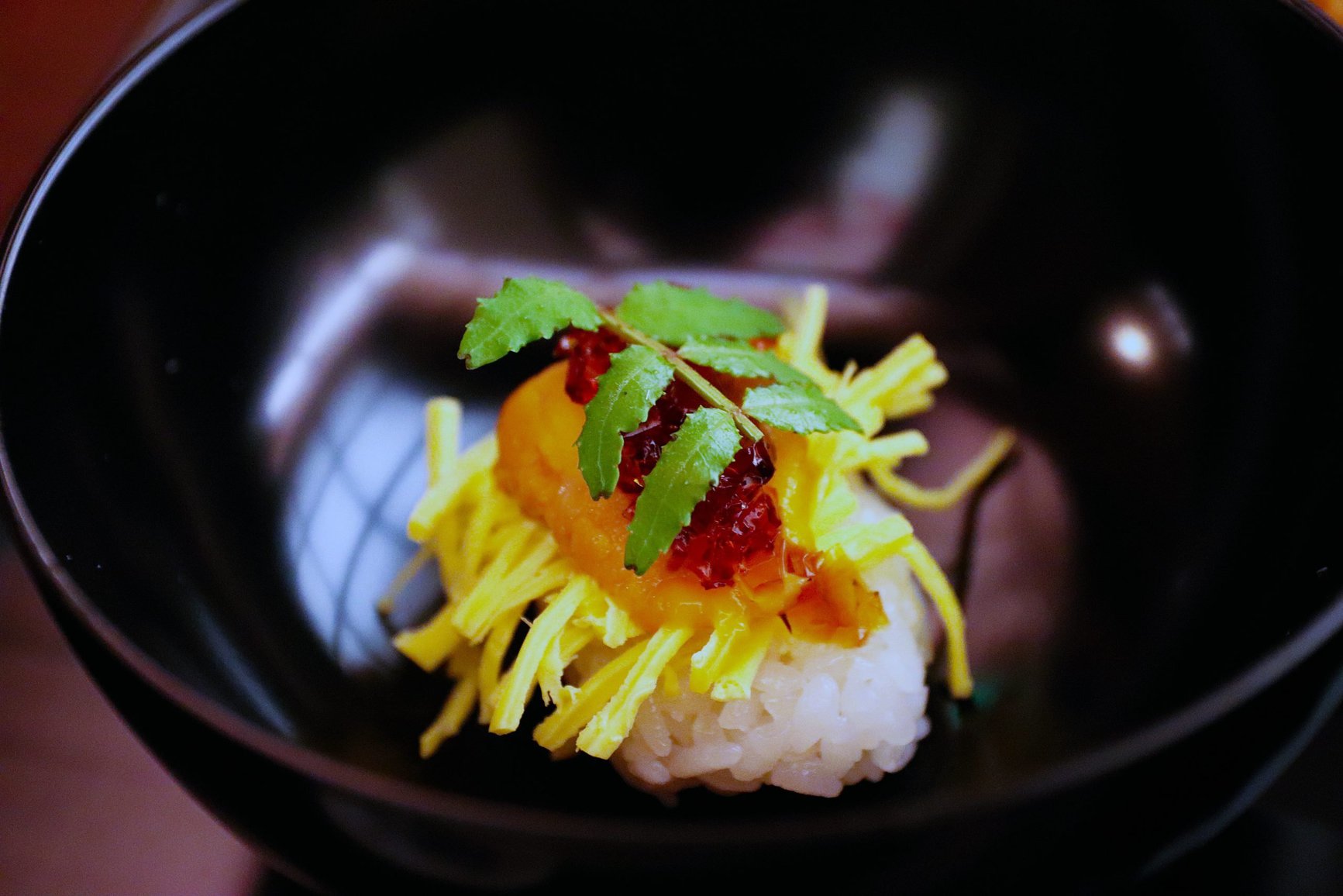
Traditional one-soup-two-dishes style. Sea urchin Chirashi Sushi Deep-fried tofu with white miso soup and Tuna, avocado, zucchini with ponzu jelly
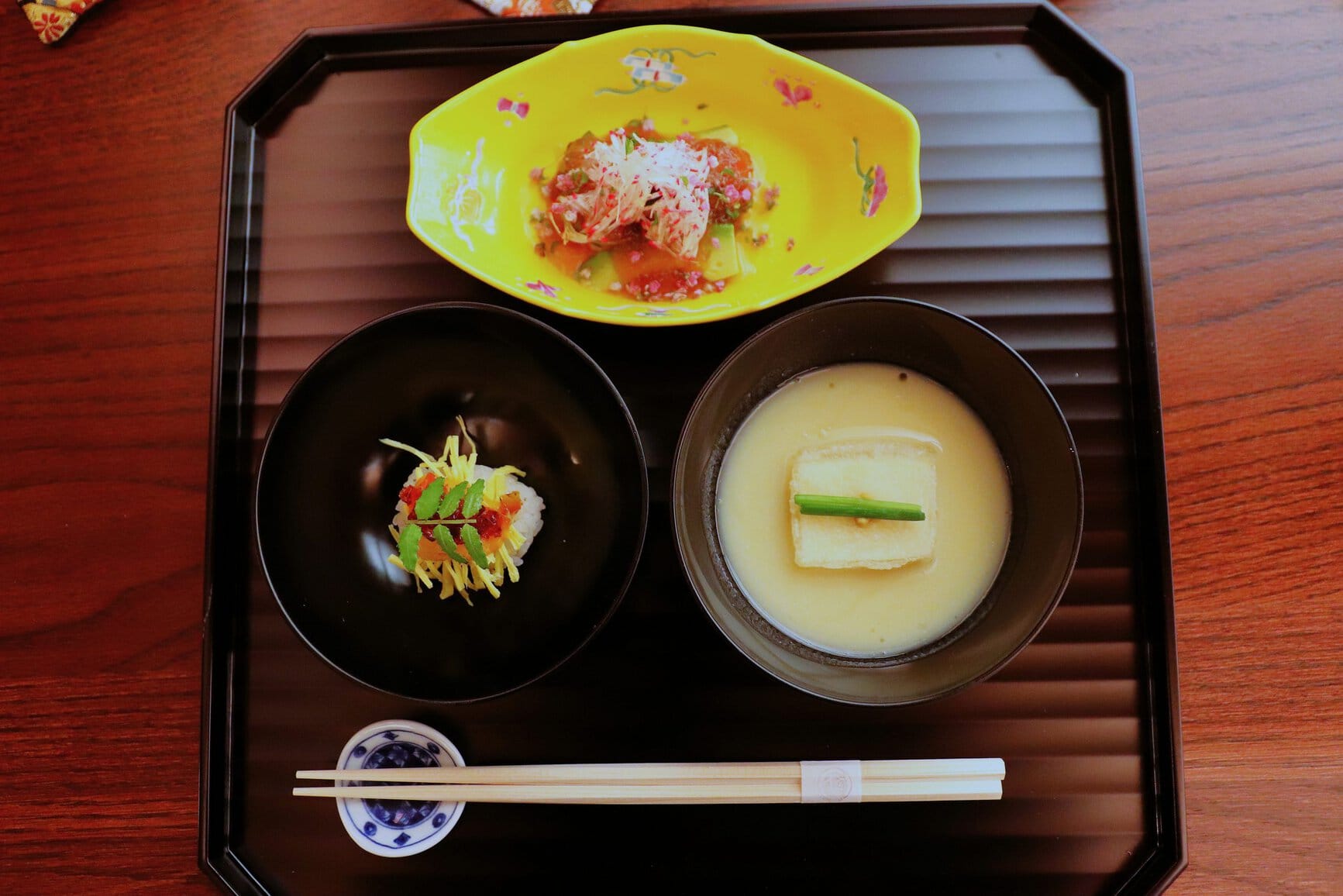
I absolutely loved the miso soup with deep-fried tofu. I never knew tofu could be so melt-in-your-mouth delicious! And the soup was rich and just full of flavor. Even though it was the first thing we ate out of many items during our tasting, it remained one of my favorites throughout the meal. Jason even said it might have been his favorite of the entire evening.
The Sea urchin sushi was definitely packed with flavor as well. It was unlike anything else I’ve tasted before. It’s a pretty “fishy” flavor, which is not for everyone. I don’t know that I could eat much more than a small bit of this at once, but it was really interesting to try.
The final part of this course was the tuna, avocado, and zucchini. This was a bit lighter and refreshing. It was another one that Jason really enjoyed, and ranked very highly out of everything we tried overall.
Course 2: Sashimi
4 kinds of today’s seasonal sashimi, with assorted garnish.
We had skipjack, bluefin tuna, Japanese seabream, and scallop. The garnish was a daikon radish.
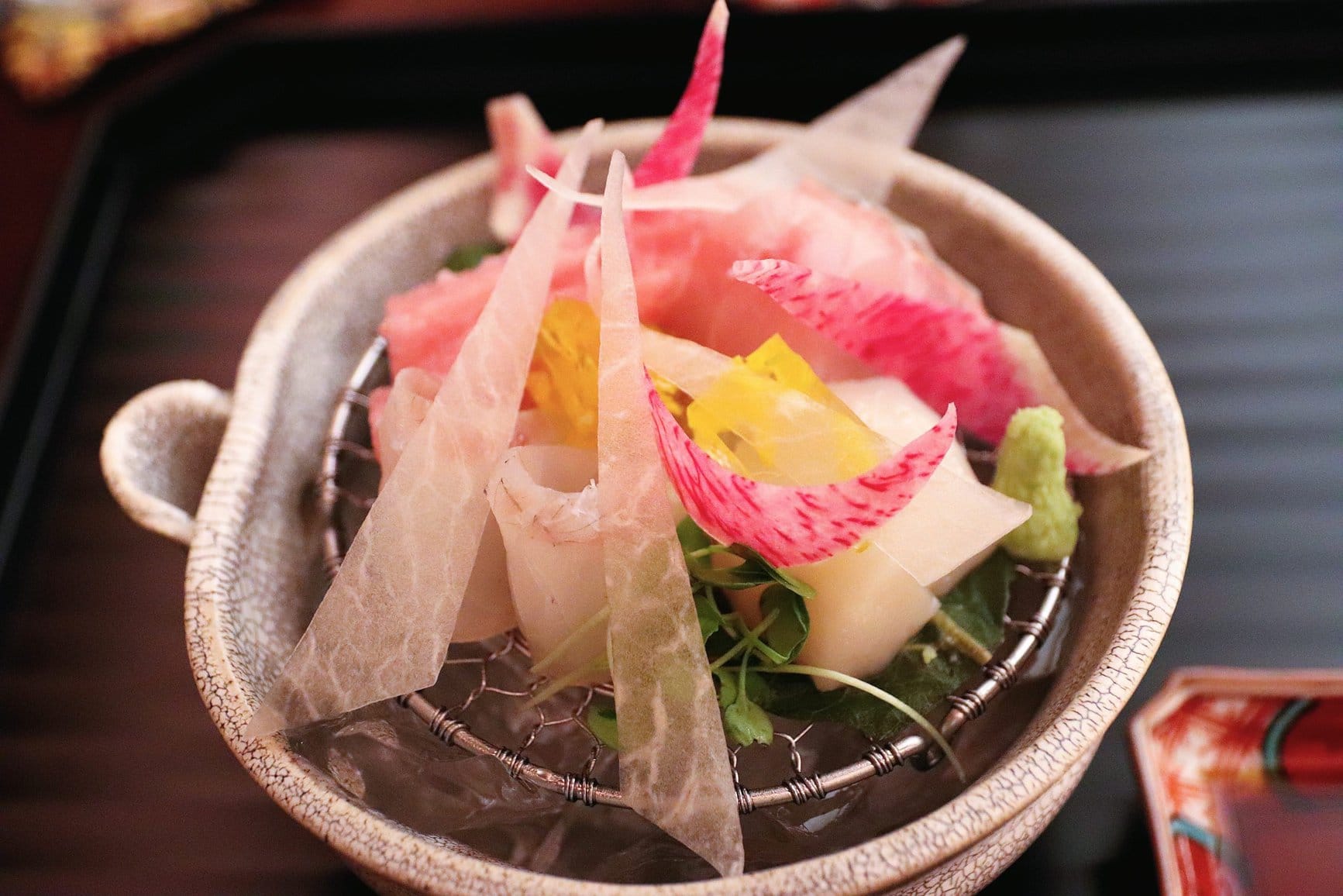
The seabream and the skipjack were the two white/translucent fish on the plate, and both were fairly mild (but excellent with the wasabi!). I don’t know that I’ve had raw scallop before, but it was delicious.
The highlight was the bluefin tuna though. This was a much fattier tuna, and it tasted so smooth and almost buttery. Jason described it was “lovely and smooth,” and we both agreed this was our favorite from the sashimi course.
I know that eating sashimi seems very unappealing to some people, and not everyone has the stomach for raw fish. I enoy sushi, but just raw fish without the rice and other toppings isn’t something I will normally opt to order or eat. But in this case it was just such a great experience to try everything. And if you enjoy sashimi, I have a feeling this will be some of the best you’ve ever had.
Course 3: Hassun
7 kinds of seasonal small plates tailored by Takumi-tei
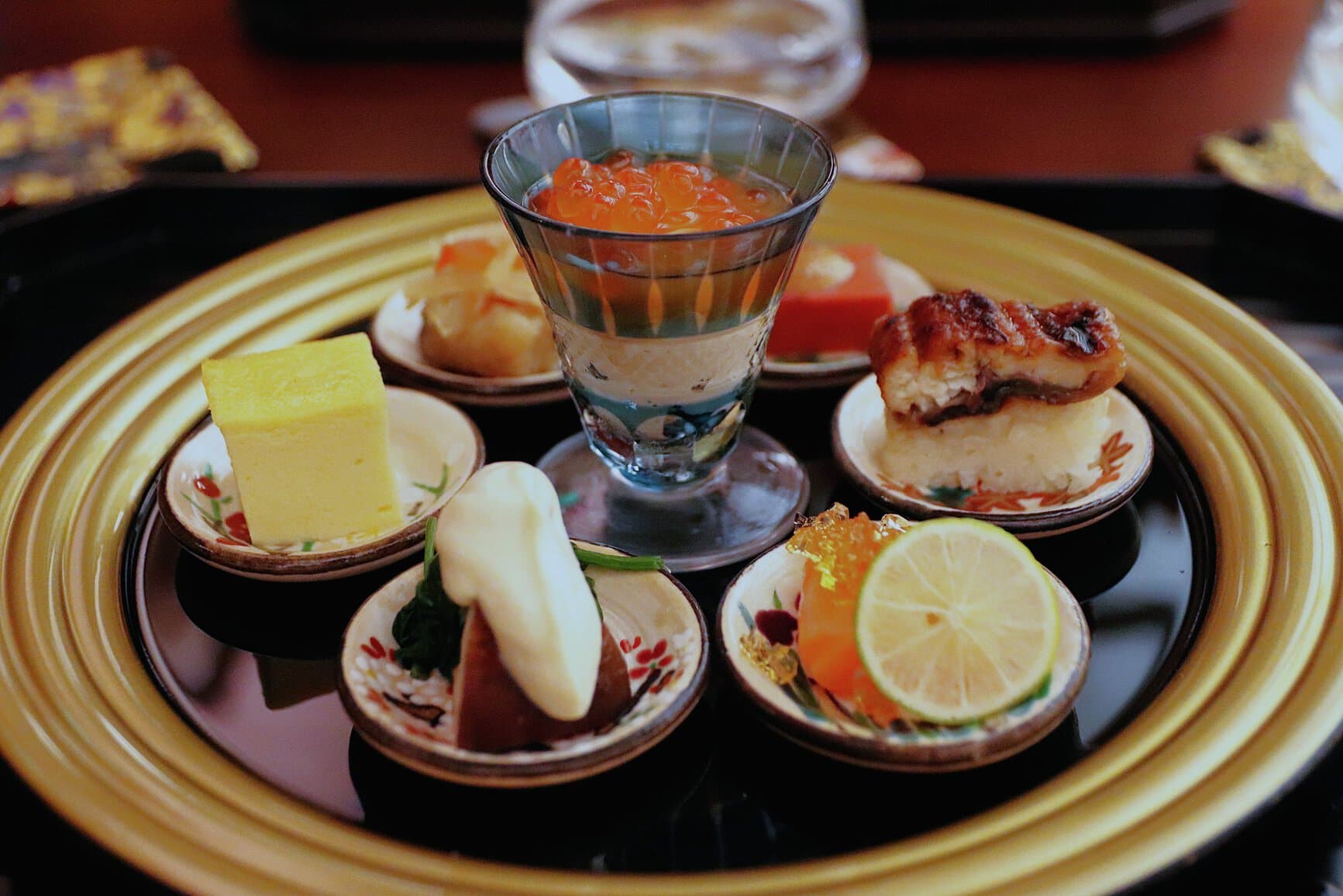
Our plate had yuba and salmon roe, shitake and spinach with tofu paste, egg cake, eel tail with a fermented paste made with rice vinegar, konnyaku with miso dengako, eel sushi, and salmon with seaweed broth and lime.
I was very intrigued by this course because you get 7 tiny little bites of different things. Since I like trying new things as much as possible, this is a great way for me to be really adventurous!
Takumi-Tei definitely seems to capitalize on this too, with many of these small dishes feeling the most experimental or different than what we (at least your fairly adventurous Americans) are used to. They absolutely used this time to play around with textures, too.
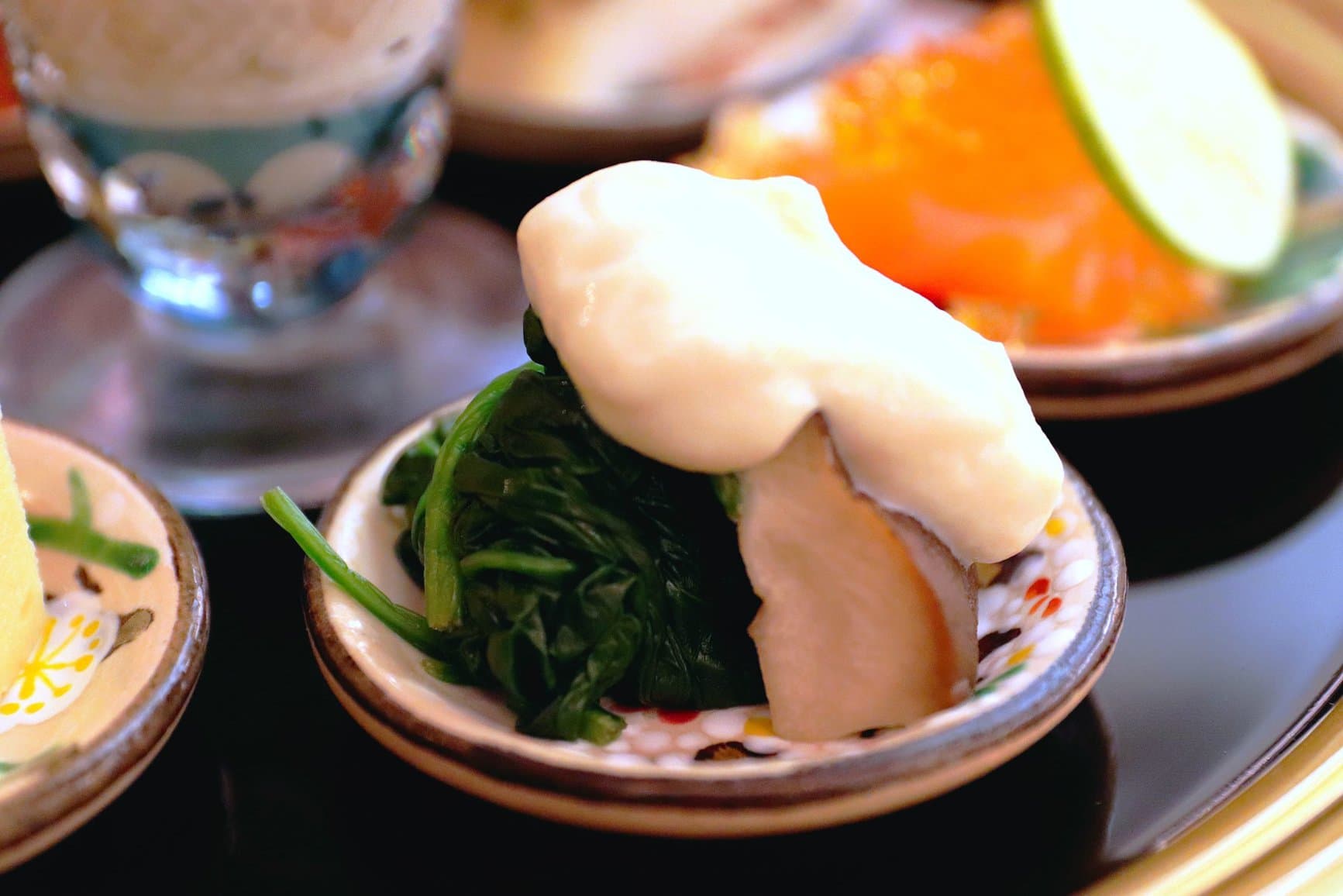
We started with the spinach and mushroom bite. The sauce on top was apparently a tofu paste, but it tasted nutty to me. This was Jason’s favorite item from this course. I really enjoyed it too, though I’m not a big fan of mushrooms and this definitely had the mushroom texture that I don’t care for. The spinach with the sauce was great though.
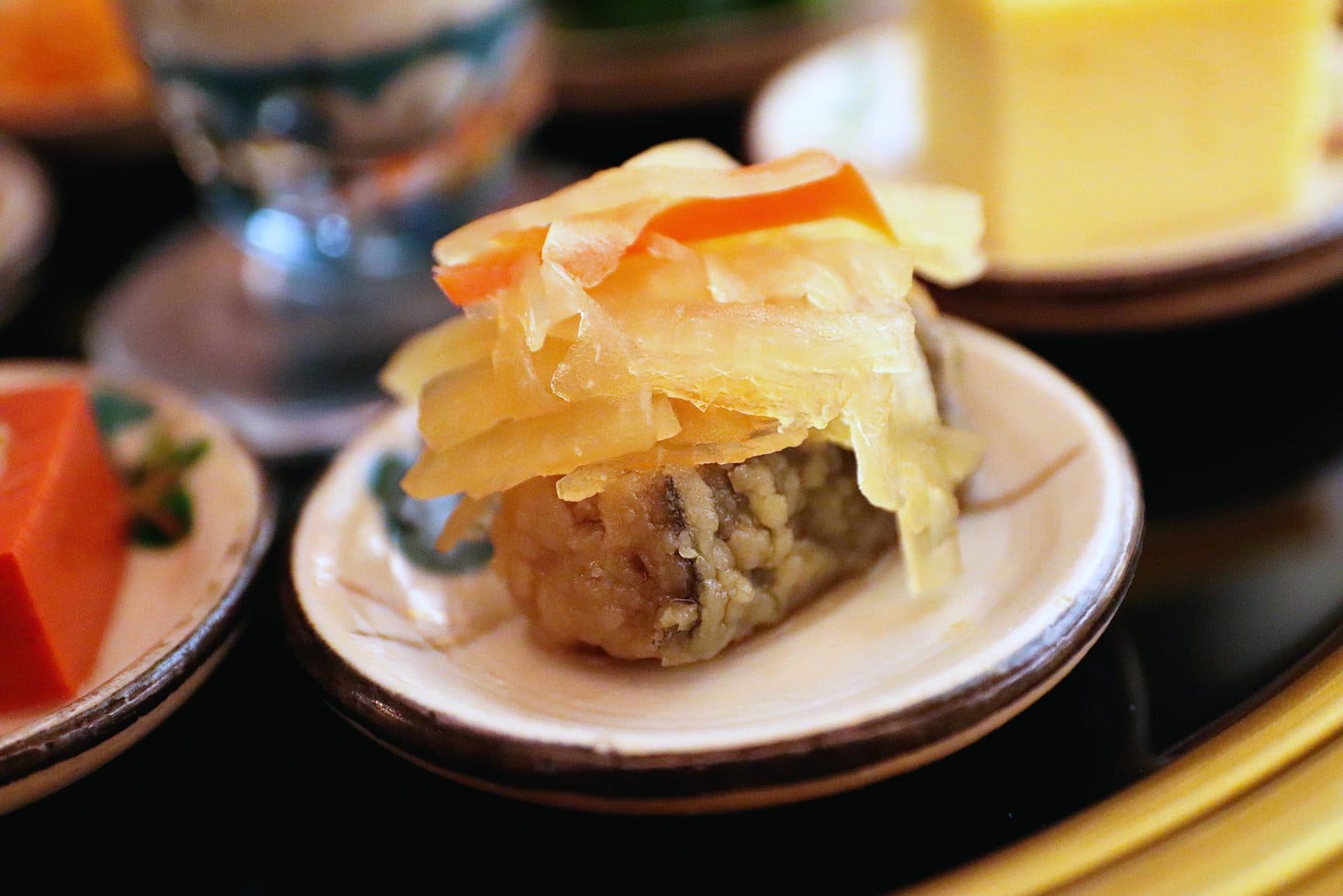
The egg dish was mild but surprising in texture. To me, it really didn’t taste like egg! It honestly seemed like eating cake. It didn’t do a lot for Jason though. He said the texture was interesting since it seemed like a pastry, but the taste was pretty standard. Then there was a bite that I believe she said was “marinated fish,” but I’m not sure. The Disney Food Blog review suggests it was eel tail. Whatever it was, this was my favorite from this course. The texture was more like traditional sushi and it was a great balance of flavors.
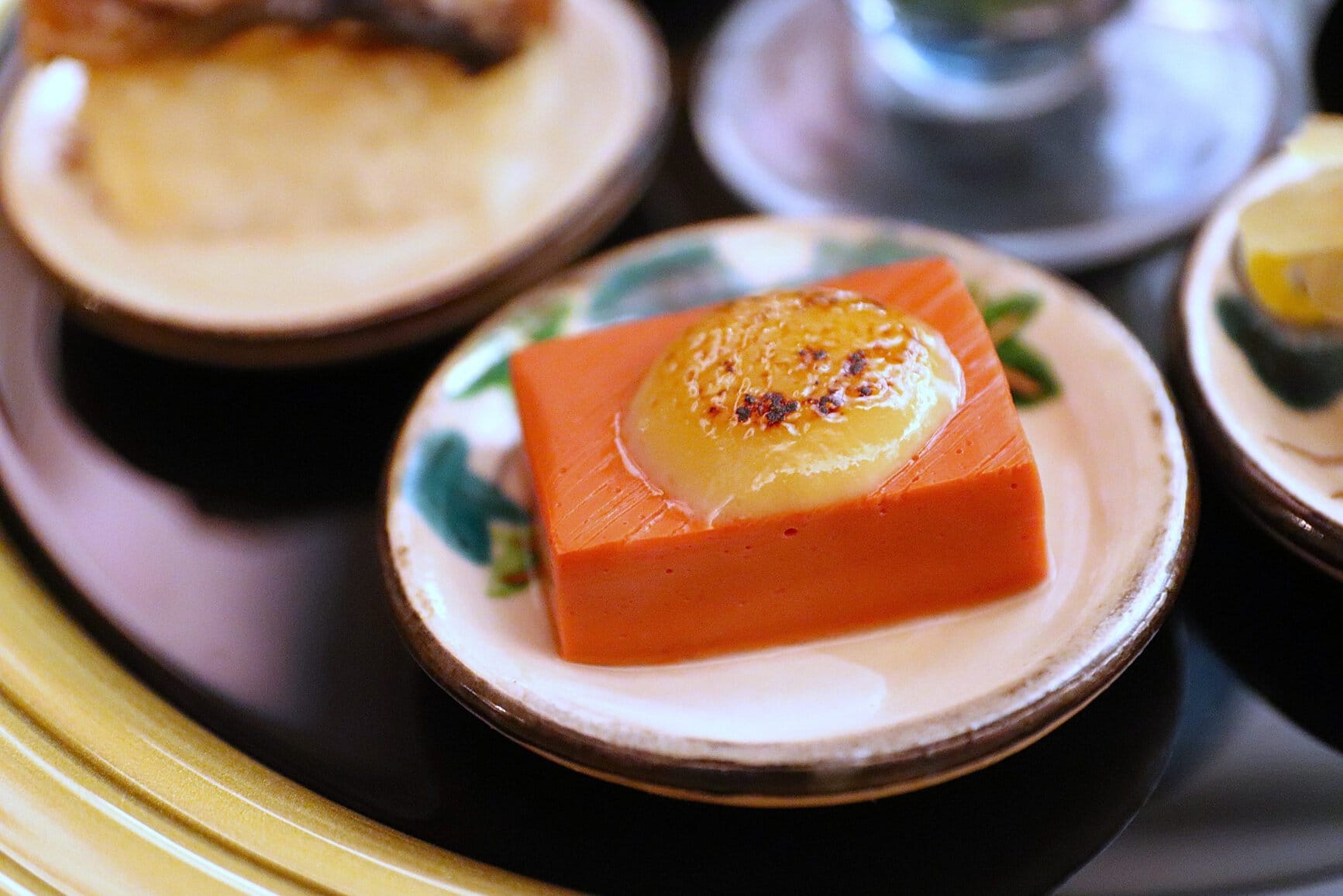
This was followed by the konnyaku with miso dengako. I honestly could not tell you what the base of this dish was – Jason thought she said sweet potato or something like sweet potato, and doing some research seems to indicate that konnyaku is indeed a similar root vegetable. The way this is prepared, though, was certainly unique. The texture was basically like a gelatin, so not what you’d expect. The miso paste on top was delicious, though the flavor of the dish as a whole with that texture was not my favorite.
Following that was an eel sushi, which was good if not my favorite. Jason really likes eel and he thought this was very flavorful. Finally for the small plates we had a salmon dish with seaweed and lime. It’s not the flavors I would usually expect for salmon, but I really liked it! Maybe lime salmon should be more of a thing. Jason recommends that you eat the lime (but not the rind).
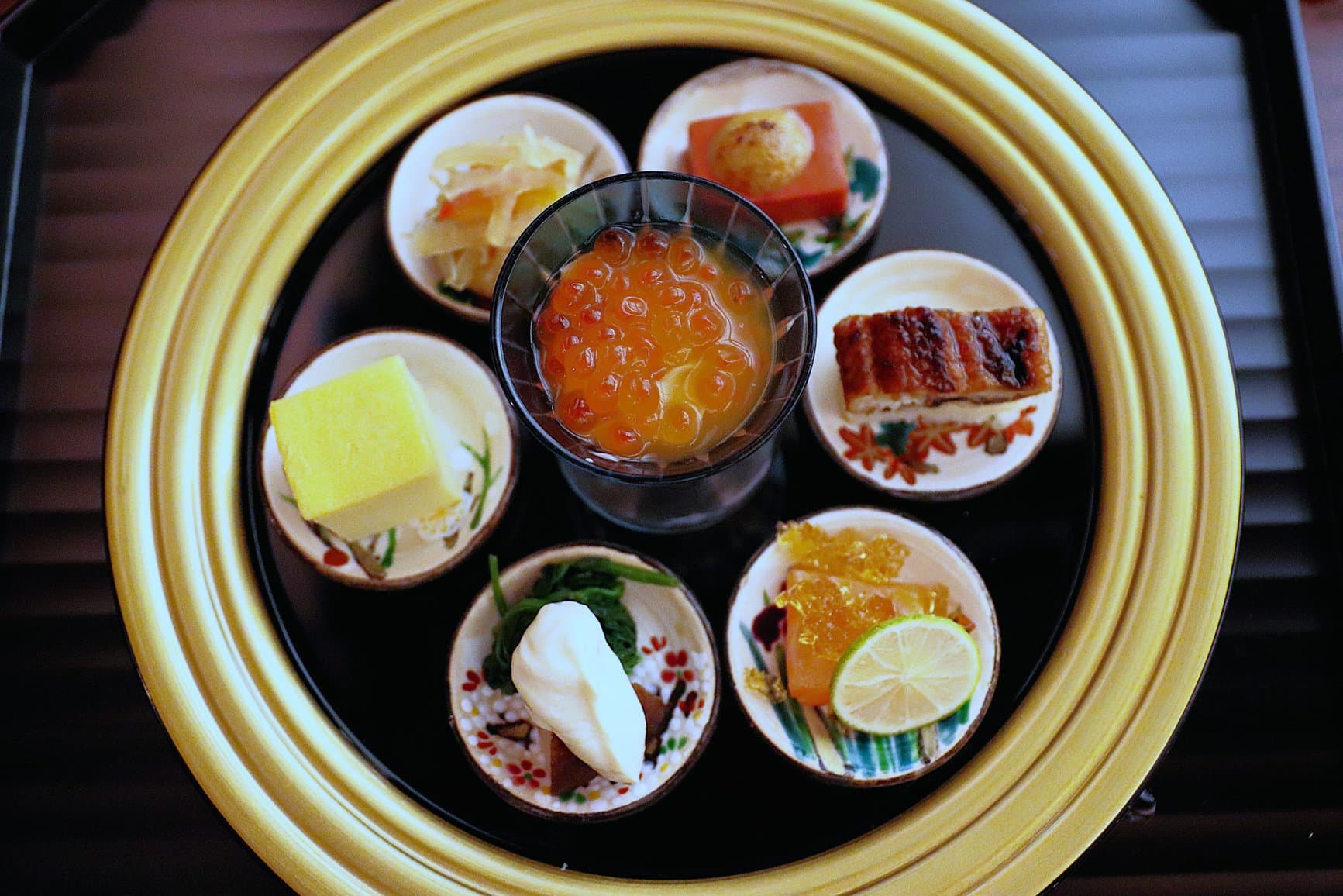
In the center was the yuba, which was served with salmon roe. I think this was the one thing the entire night that I didn’t care for and didn’t finish. Neither Jason nor I liked it very much. The texture was weird and the flavor wasn’t for me. While I normally like salty, the roe was SO salty I couldn’t eat much of it. Jason also didn’t care for this one: “I think this was gross. Salmon roe was a little weird but I’m all right with it. The flaky curd things were just too slimy for me.”
Course 4: Shiizakana
Deep Fried Japanese Wagyu Beef Shiso leaf Roll, Original Yellow Vinegar, Shiso flowers, Yuzu salt, key lime, Baked Flounder with Saikyo Miso, Pickled celery
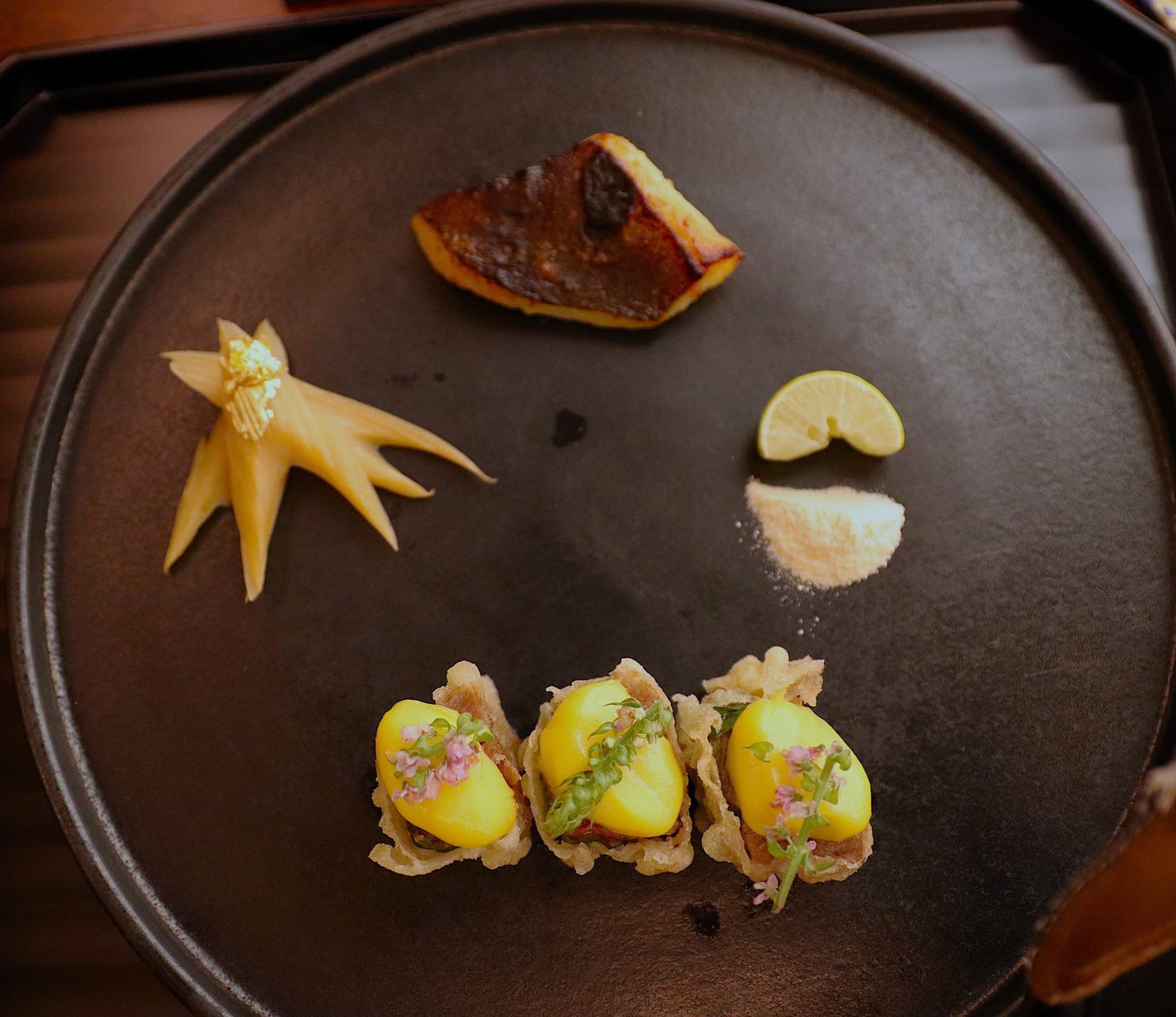
This was the best course of the meal for us. We went back and forth a few times on whether the flounder or the deep-fried Wagyu beef was better. Both were just that good! The pickled celery was fine but not the highlight here.
The flounder was just completely soft and melt-in-your mouth. Whatever it was cooked in was rich, but not overpowering, letting the natural flavor of the flounder shine through. Jason kept saying “how do they MAKE flounder like this??” He said it was the best flounder he’s ever had, and wants to know how they made it so delicious so he could try to cook it that way himself at home.
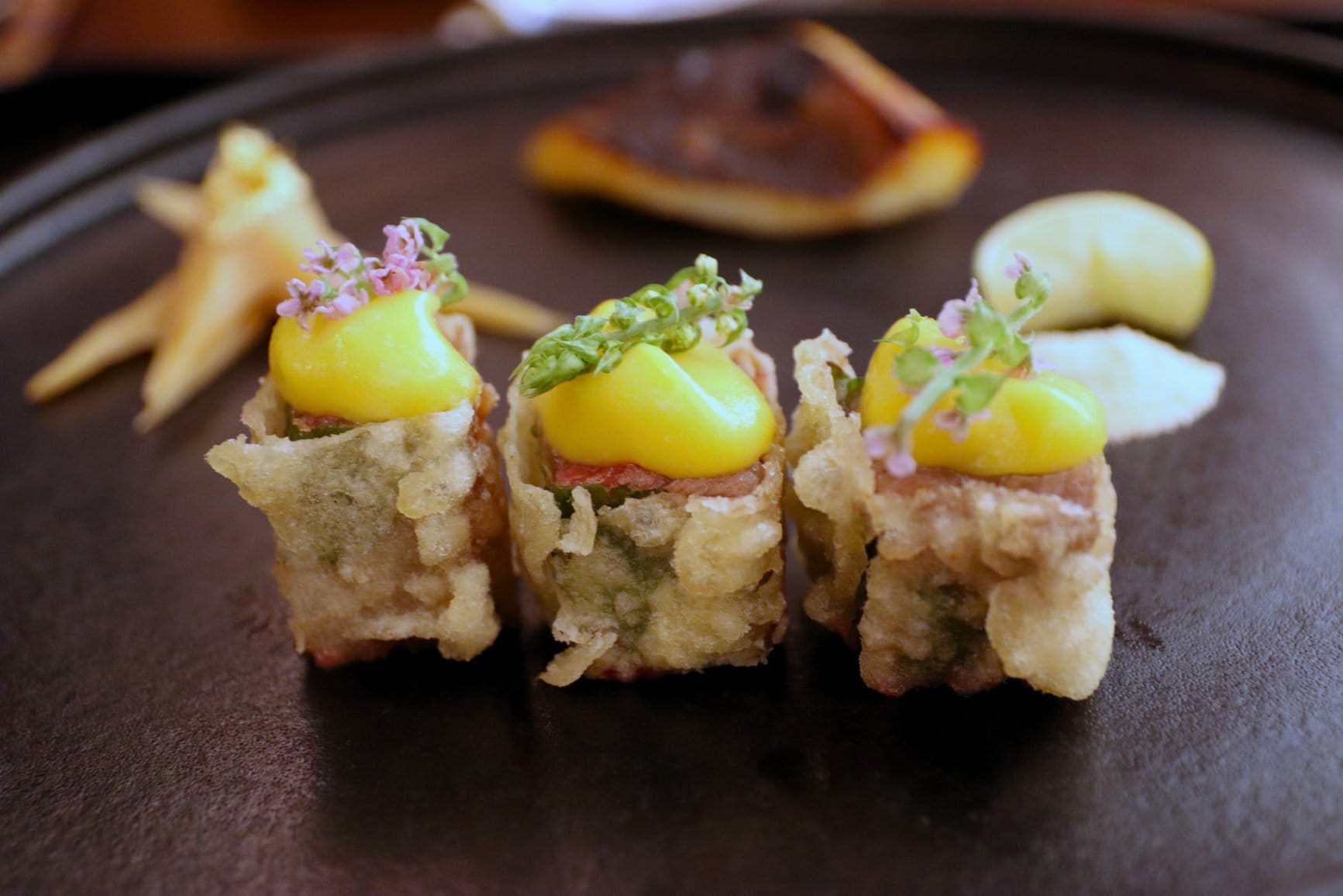
And the deep-fried Wagyu beef was possibly even better. I’ve never had genuine Japanese Wagyu beef, and my first thought was that it seemed like maybe an odd choice to deep-fry it and make it tempura. But oh my. I don’t even know if I can describe how good this was. Combined with the yellow vinegar on top (which had a sweetness to it), the whole bite was just like a little flavor bomb of amazingness. You know the scene in Ratatouille when he’s eating good food and sees fireworks? It was like that.
It also came with a yuzu salt that you could sprinkle on top. I liked this but Jason felt the wagyu didn’t need it the extra salt and it was a bit too much for him.
Course 5: Onmono
Please select from the following: Japanese wagyu beef and bamboo shoots with tortoiseshell sauce, maitake mushrooms, chopped myoga and chives, dew ginger or Spiny Lobster and bamboo shoots with tortoiseshell starchy sauce, maitake mushroom, chopped myoga, chives and dew ginger.
The entree course gives you a choice between two items, but it was basically the same dish with two different proteins. You had a choice between Wagyu beef and spiny lobster, so we eat got one so we’d be able to try both.
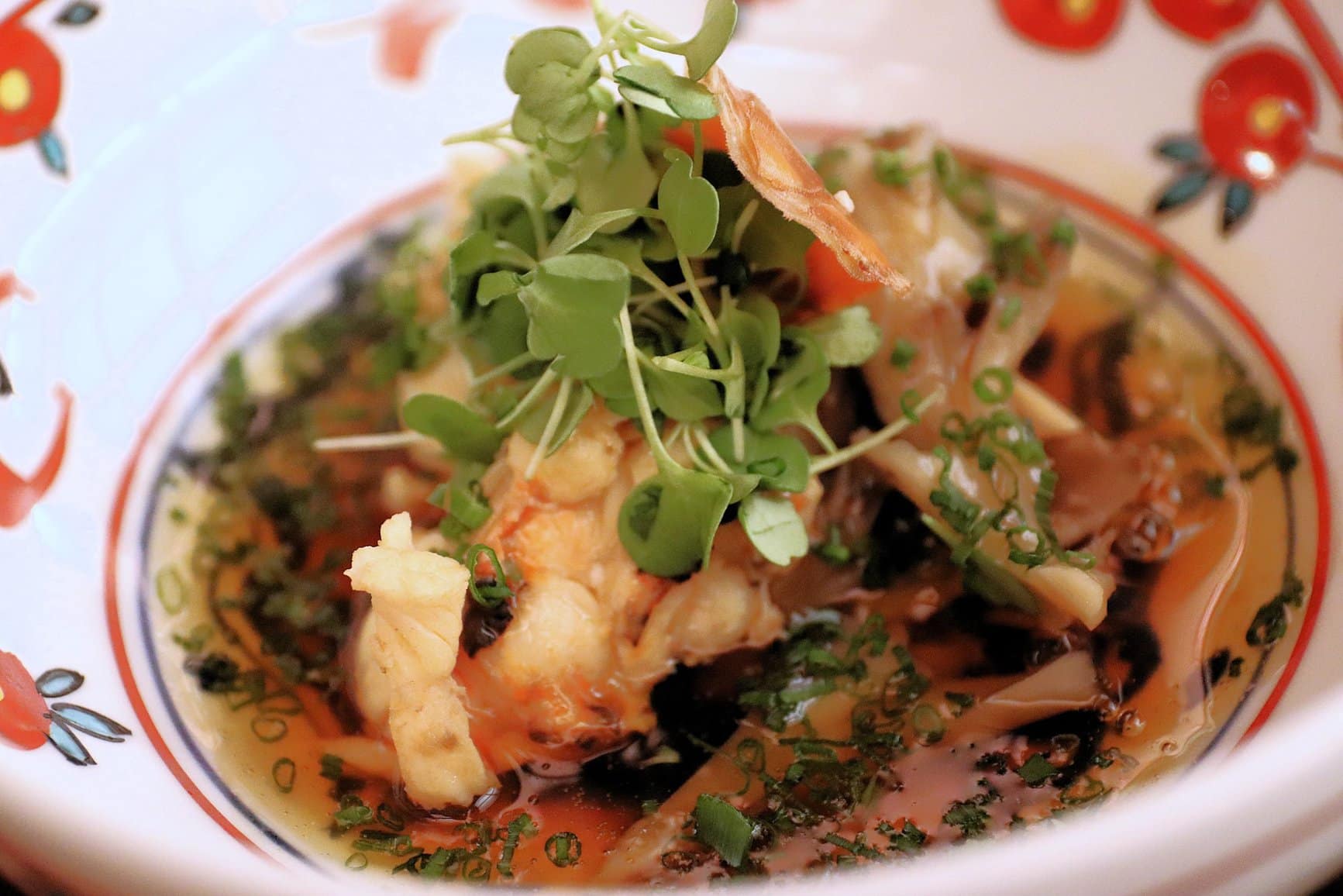
The lobster itself, as Jason described it, “was pretty much lobster.” So it was very good (we love lobster!), but not necessarily better than lobster elsewhere at other nice restaurants. I would agree with that.
The Wagyu was very good with a great flavor. However, I actually enjoyed the way it was served in the previous course better. I kind of wish we had the chance to try it just on its own as a steak so I could get that experience. It really soaked up a lot of the flavor from the broth. Which was definitely delicious, I’ve just never tried Japanese Wagyu to be able to compare it to regular beef.
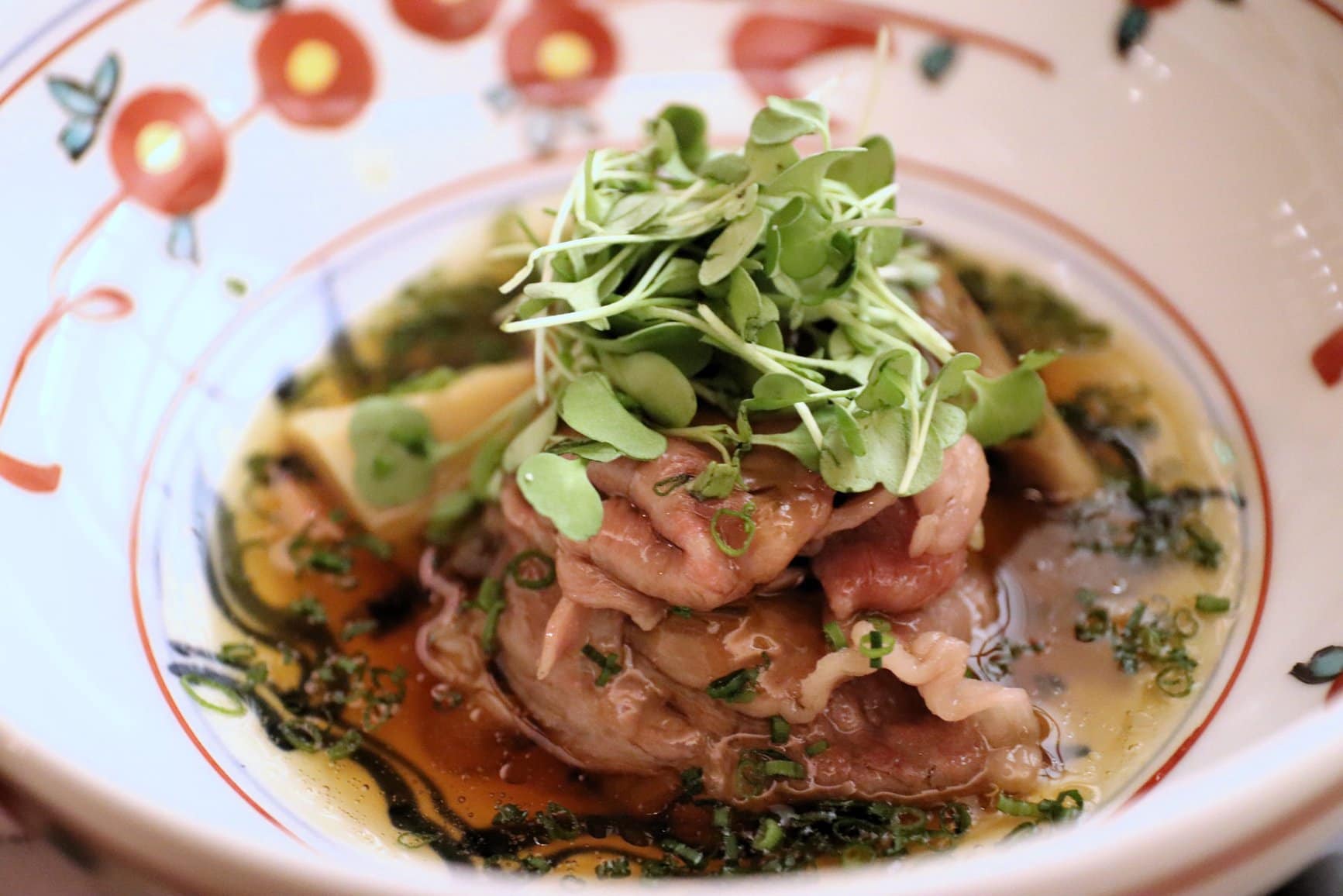
I liked the broth, but it wasn’t Jason’s favorite. He said it was weirdly viscous for him, although it had delicious flavor – he is very particular about soup though, and often doesn’t like soups. Jason did enjoy the mushrooms here (and ate mine, as I’m not a bit fan of mushrooms). I did try one and thought they did an excellent job soaking up all the flavor from the broth.
Course 6: Gohanmono
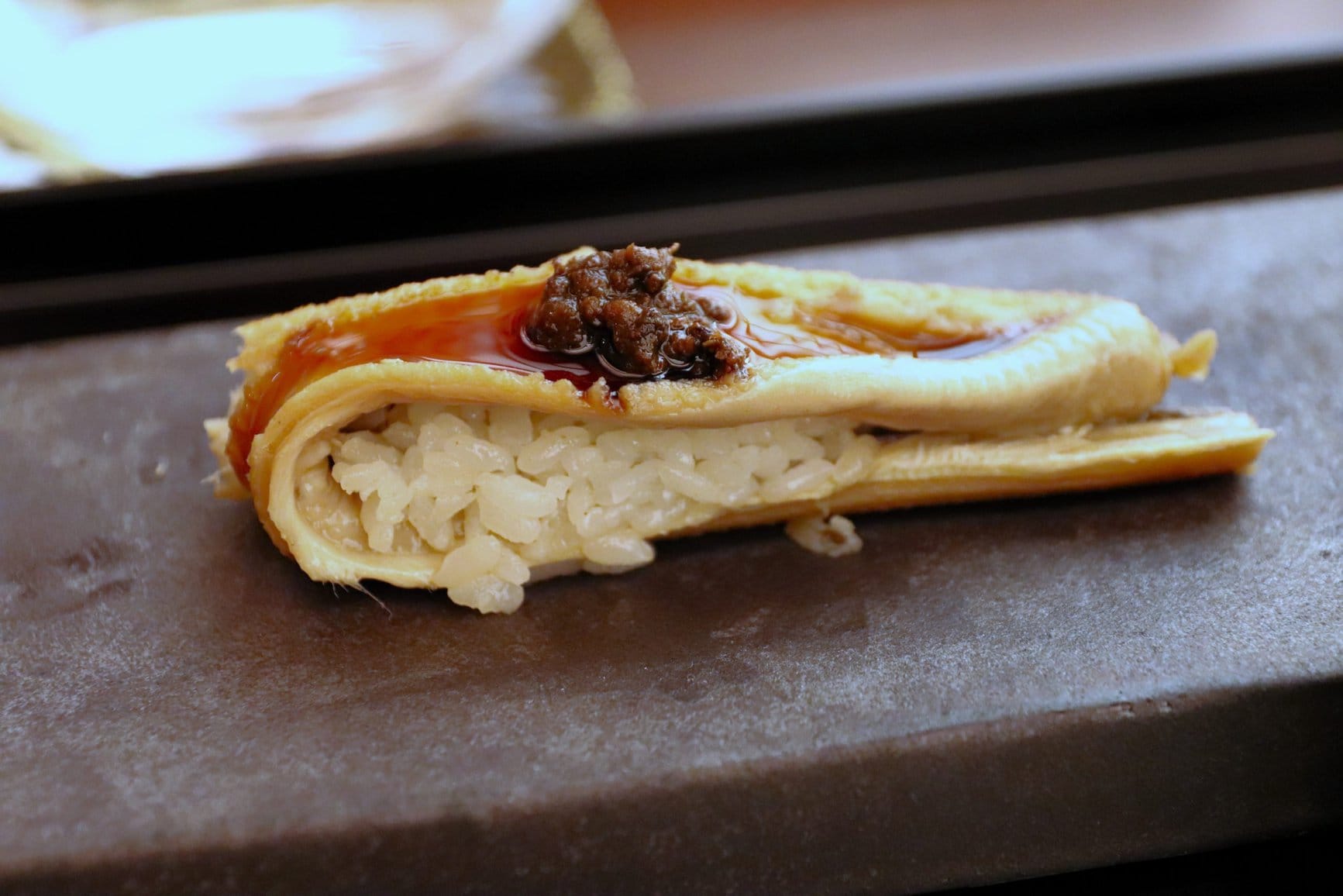
Cooked conger eel nigirizushi with simmered sauce, wasabi, gari and Red miso soup
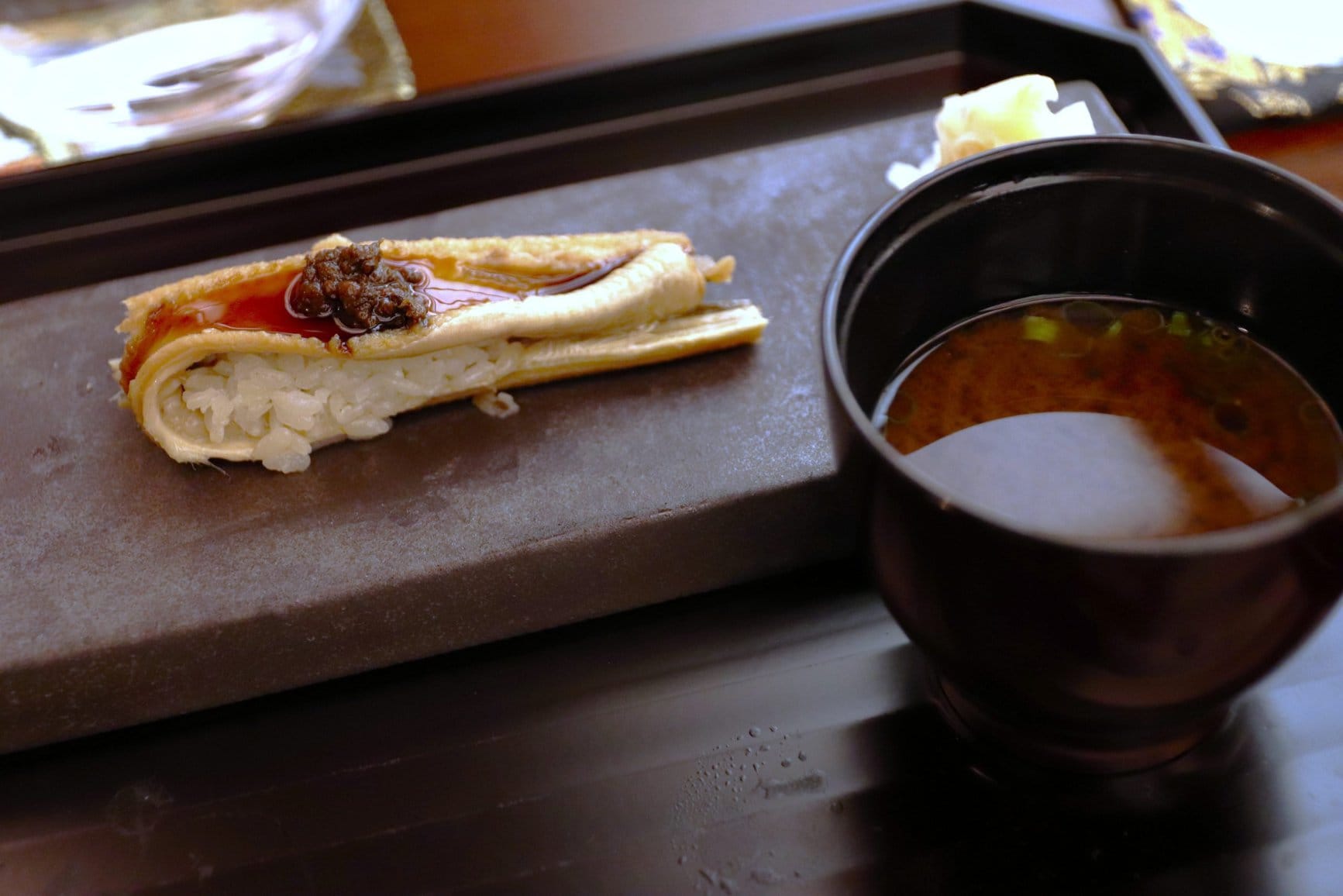
Jason thought this was yummy and very tender. It was definitely good, but I was reaching the point of the meal where I was getting close to full and I knew I wanted to leave room for dessert. I gave about half of my portion to Jason.
I did really enjoy the red miso soup. While it wasn’t nearly as delicious as the white miso soup from the beginning of the meal, I found it to have some interesting flavors and a nice taste.
Course 7: Macha and Kanmi
Please select from the following: Homemade green tea cake, vanilla ice cream, whipped, blackstrap molasses, mint or Japanese pumpkin blancmange with blackstrap molasses, whipped, mint or Florida orange jelly with strawberry sorbet, whipped mint
Jason’s dessert was the Florida orange jelly with strawberry sorbet, whipped mint:
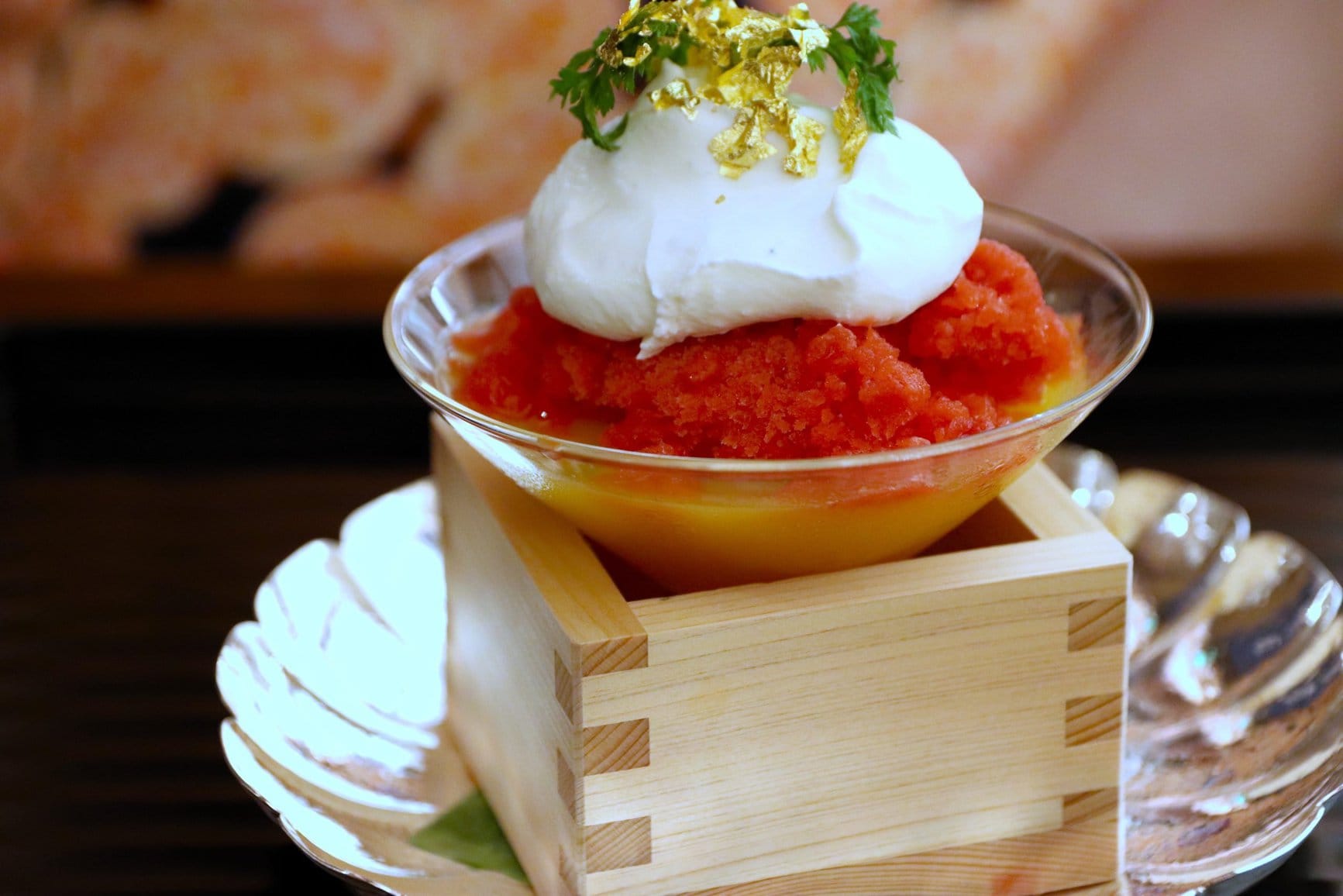
He really enjoyed it, commenting several times he was glad he picked this one. It was delicious but very, very sweet.
I had the Homemade green tea cake and vanilla ice cream:
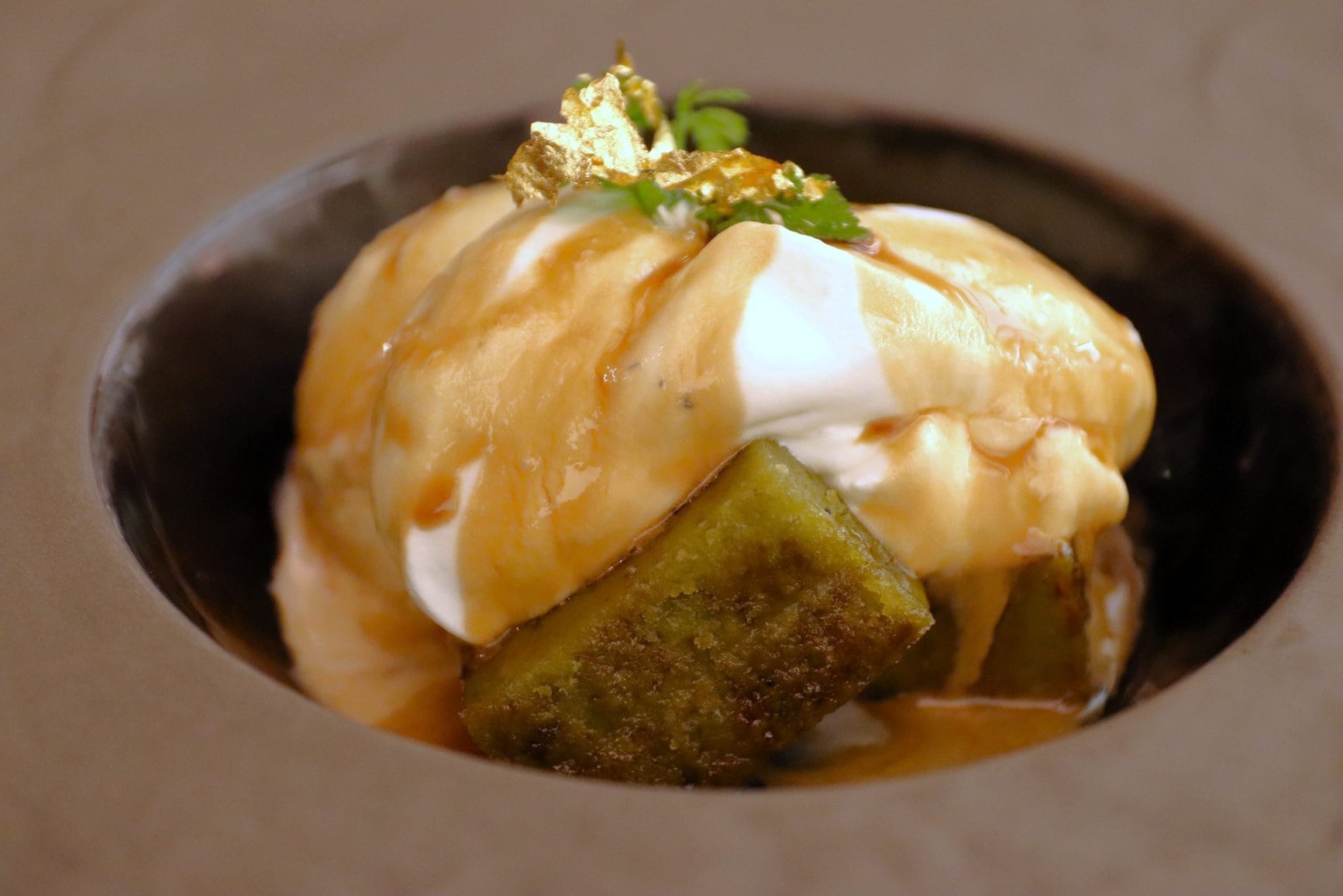
My dessert was good, although I’m not sure the green tea cake itself stood out all that much to me. I really enjoyed the brown sugar sauce that came with it. All of it together with the ice cream was a very tasty way to finish the meal.

Mayu made the green tea tableside, and she prepared it literally from scratch, even grinding the macha for the tea. It is probably not what you would expect if you’re used to green tea. I thought it was excellent. It was thicker, almost frothy, but the flavor was earthy and rich. Jason is not really a tea drinker so this didn’t do much for him, but I thought it was the perfect way to end the meal.
Is Takumi-Tei worth it?
This is always a subjective question, but it’s even harder to answer here because Takumi-Tei at Epcot has such a high price tag. I can’t really tell you if Takumi-Tei will be worth it for you (other than sharing as much as possible to help you decide). But I can tell you if we thought it was worth it for us.
And it absolutely was. The price tag is very high (after the food, drinks, tax, and tip we paid about $700). But it was really the main part of our trip for our anniversary. We are both foodies, and Jason in particular is constantly seeking out new things to try. That can get difficult at times in suburban Pennsylvania, so the opportunity to do a meal like this is very special.
We also love seafood and sushi and are willing to try most things. But be aware it is a lot of raw fish. And the service was truly incredible, which greatly helps me decide if the meal is worth it.
If you’re also a sushi lover and an adventurous eater who is looking for a splurge, I suspect you’ll find Takumi-Tei a great experience. It’s possible that in big cities where you may have access to similar dining experiences it may not be as unique, so I can’t really speak to comparing it to other high end Japanese dining locations. But for most of us this is a really different and special opportunity.
I would absolutely go back, but with the price tag I think it wouldn’t be for at least 5 years or more. It’s the sort of thing we need to prioritize and budget for!
Takumi-Tei FAQs
Takumi-Tei FAQs
Not sure where to start when planning your Disney World trip? Feeling overwhelmed with all of the information and how to keep track of everything?
Consider vacation planning printables – over 60 pages of trip planning, including a budget worksheet, guide to characters, trip comparison worksheet, a look at the dining plans, info about Disney Lightning Lane passes, daily itineraries, packing checklist, and much more.

Related Posts
Have you been to Takumi-Tei at Epcot? What would you most want to try?

Wow! What a descriptive review. I felt like I was there with you, tasting each course. And the photos are gorgeous1
Thank you!! It was a really cool experience.
Aw man, no one tried the pumpkin dessert? Guess I’ll just have to go myself 😉
I know, there were just too many good options!!